
Quick answer: The best roofing and construction boots combine certified toe protection (EN ISO 20345, 200 J), a puncture-resistant midsole, a slip-resistant outsole, and ankle stability. Roofers additionally need reliable grip on slopes and a lighter build — steel toe for durability, composite toe for weight and comfort.
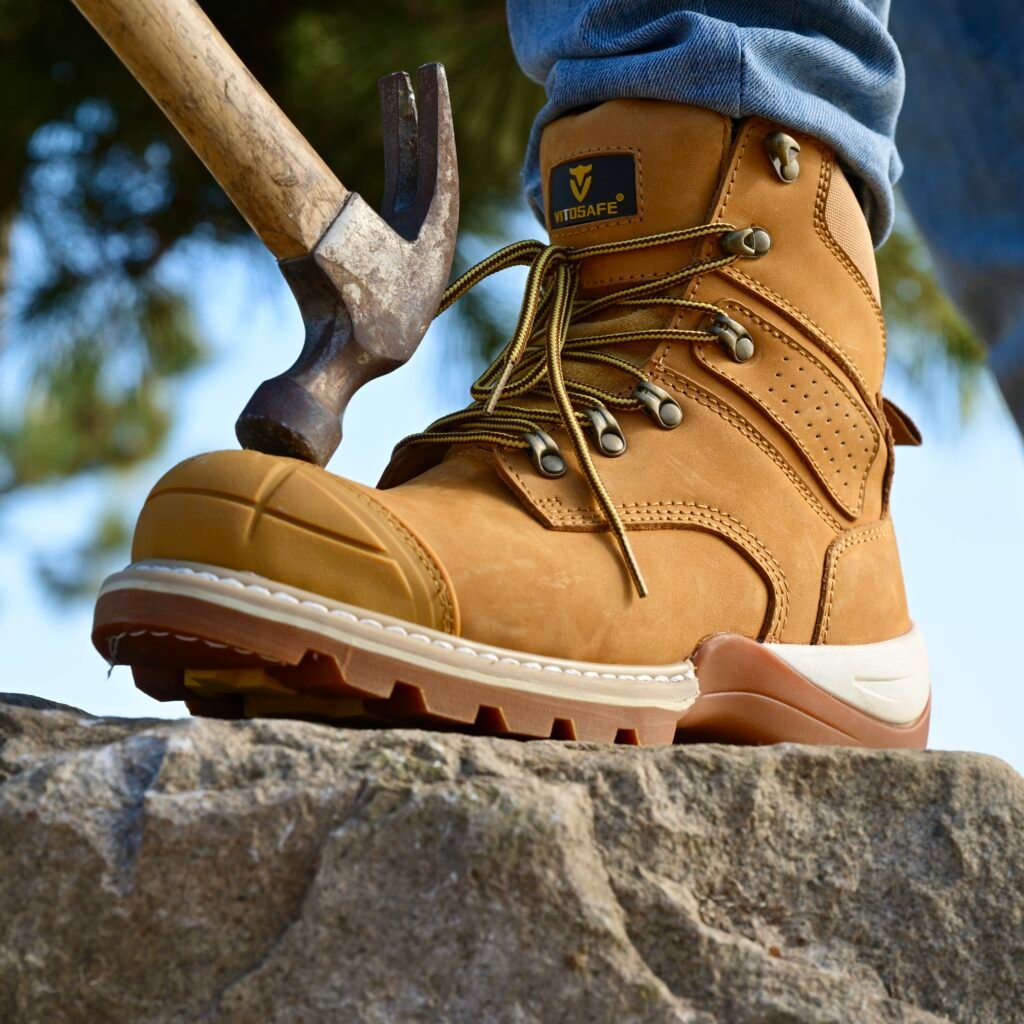
Why Job-Site Boots Are Different
Construction and roofing sites concentrate hazards: falling tools, exposed rebar and nails, uneven surfaces, wet or dusty conditions, and — on roofs — gravity. Ordinary work shoes are not designed for this mix. Site boots must protect the foot from above (impact), from below (puncture), and from slipping out from under the worker.
Key Features for Construction
- Toe protection — steel or composite cap rated to 200 J under EN ISO 20345.
- Puncture resistance — a steel or fabric midsole stops nails and scrap from penetrating the sole (S1P / S3).
- Heel and ankle support — reduces twist injuries on uneven ground.
- Water resistance — S3-rated uppers and cleated outsoles handle wet sites.
- Durable outsole — heat and abrasion resistance where needed.
Key Features for Roofing
- Grip on slopes — a slip-resistant outsole with a tread pattern that bites on shingles and metal sheeting.
- Ankle stability — mid-cut or high-cut designs with secure lacing reduce rollover risk.
- Lightweight build — less fatigue when climbing and working in awkward positions. Composite or alloy toes help here.
- Flexibility — enough give for kneeling, but structured enough to support the foot.
Slip Resistance Ratings, Explained
You will often see SRA, SRB, and SRC on product pages. These come from earlier versions of EN ISO 20345:
| Rating | Test surface | What it signals |
|---|---|---|
| SRA | Ceramic tile + soap solution | Grip on smooth, wet indoor floors |
| SRB | Steel + glycerol | Grip on oily metal surfaces |
| SRC | Both tests | Slip resistance across both conditions |
The current EN ISO 20345:2022 uses an updated, consolidated slip test, so treat these codes as a useful reference rather than the only criterion. For the full rating system, see our Footwear Category Classification guide.
Our Top Picks by Task
| Task | Recommended spec | VITOPPE line |
|---|---|---|
| General construction | S3 steel toe, puncture plate, cleated Sole | Steel toe series |
| Roofing / height work | S1P composite toe, high-grip outsole, mid-cut | Composite toe series |
| Long-shift finishing work | Alloy toe, lightweight sole | Alloy toe series |
Fit & Care Tips
- Break in gradually — wear new boots for short periods before a full shift.
- Lace fully — secure lacing is your first line of defence against ankle rolls on slopes.
- Inspect daily — check the outsole, toe cap, and midsole for damage; replace when compromised.
- Dry properly — remove insoles and air out after wet shifts to extend life and reduce odour.
VITOPPE Site-Ready Range
VITOPPE (Qingdao Vitosafe) supplies construction and roofing footwear factory-direct with OEM/ODM customization. Every model is SGS/CTC tested, EN ISO 20345 certified, and backed by 740+ clients in 12+ countries.
Frequently Asked Questions
What features matter most in construction work boots?
Toe protection (EN ISO 20345), puncture-resistant midsoles, slip-resistant outsoles, and ankle support. For outdoor sites, add water resistance and a cleated outsole (S3 rating).
What are the best boots for working on roofs?
Roofing boots need reliable grip on slopes, good ankle stability, and a lightweight build to reduce fatigue. Look for a slip-resistant outsole, a secure lacing system, and either a steel or composite toe.
What does SRA, SRB and SRC slip resistance mean?
These are slip-resistance ratings under older EN ISO 20345 versions: SRA tested on ceramic with soap solution, SRB on steel with glycerol, and SRC on both. Current EN ISO 20345:2022 uses a consolidated slip test, but the older codes are still widely listed.
Should roofers wear steel toe or composite toe boots?
Both meet the same 200-joule standard. Choose steel for maximum durability and value, or composite if you need lighter weight and non-conductive protection. Many roofers prefer composite for all-day comfort.
How should work boots fit for construction work?
Boots should be snug at the heel and midfoot with about a thumb’s width in front of the toes. Break them in gradually, lace fully for ankle support, and inspect the outsole and cap daily.
Conclusion
Site boots are safety equipment, not just clothing. Match the spec to the hazard — toe cap, puncture plate, slip rating, and ankle support — and choose steel or composite based on durability versus weight. The right pair protects your crew and reduces fatigue-driven errors.
Equip your crew with site-ready boots from www.vitoppe.com — bulk pricing and OEM/ODM available.