
Quick answer: Protection comes from the certification rating, not the weight. Choose the lightest boot that meets your required EN ISO 20345 class — lightweight shoes cut fatigue over long shifts, while heavier steel-toe boots earn their weight only in maximum-impact environments like foundries and smelters.
Why Weight Matters
A worker takes thousands of steps per shift. Every extra gram on the foot is lifted thousands of times, which adds up to measurable leg, knee, and back fatigue. Fatigue slows reaction time and increases the chance of a slip or misstep — so weight is a genuine safety variable, not just a comfort preference.
- Fatigue — lighter boots reduce energy cost per step.
- Productivity — less fatigue supports steady performance across a full shift.
- Compliance — comfortable boots are more likely to be worn correctly, all shift.
What Makes a Boot Light
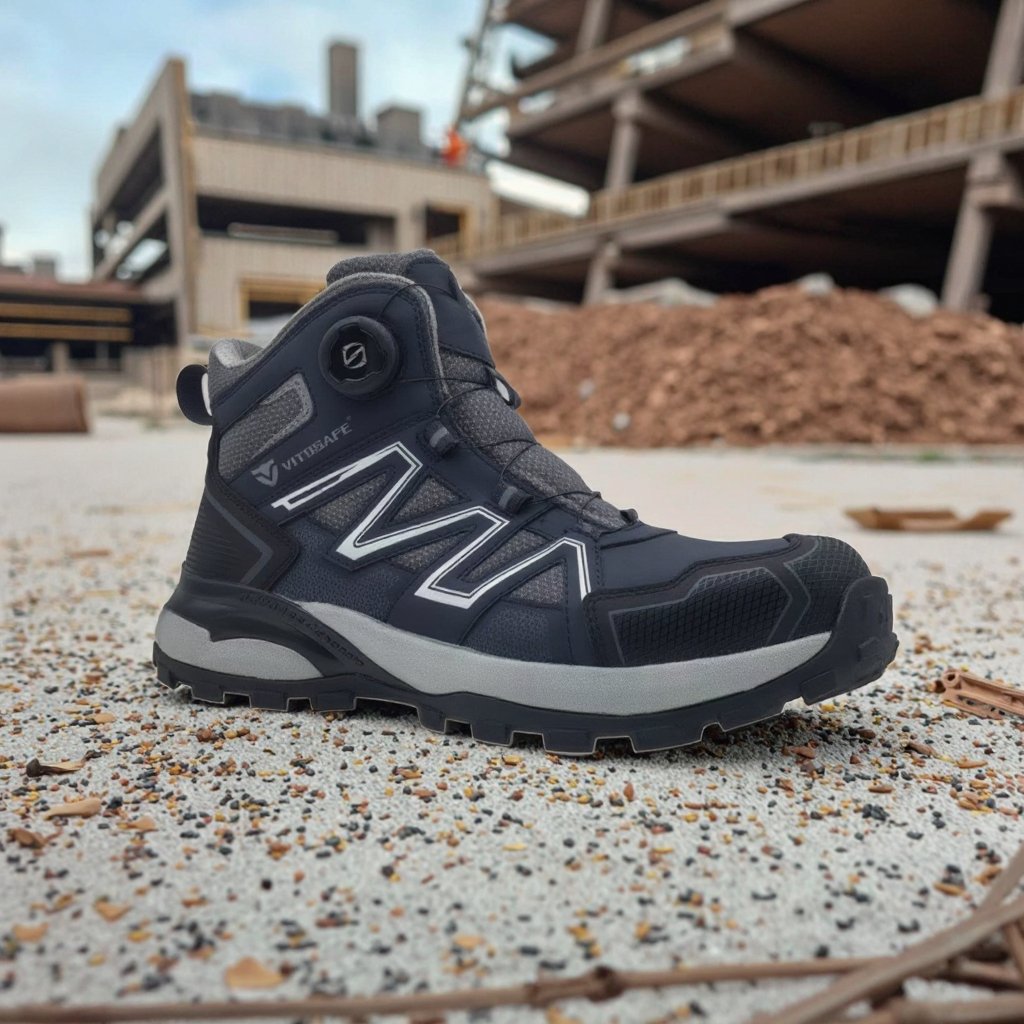
- Toe cap — composite or alloy caps weigh less than steel, at the same 200 J rating.
- Midsole — PU or EVA foam instead of dense rubber.
- Upper — breathable mesh or microfiber instead of heavy full-grain leather.
- Puncture plate — a fabric (Kevlar-type) plate instead of a steel plate.
Combining these can remove a surprising amount of weight without dropping the certification class. See our Alloy Toe vs Steel Toe guide for the cap-level comparison.
When Extra Weight Is Worth It
Heavy boots are not obsolete. In the highest-impact environments, their density is an advantage:
- Foundries and smelters — thick soles and steel caps resist heat and repeated impact.
- Heavy fabrication and steel handling — maximum durability against crushing and abrasion.
- Rough terrain — a stiffer, heavier boot offers more structural support under load.
The Comfort vs Protection Framework
| Step | Question | Action |
|---|---|---|
| 1 | What is the hazard and required rating? | Fix the EN ISO 20345 class first (S1, S3, etc.). |
| 2 | Does the job need maximum-impact durability? | If yes → steel toe, heavier build. |
| 3 | Are workers on their feet all shift? | If yes → composite/alloy toe, lighter build. |
| 4 | Are there metal detectors or electrical risks? | If yes → composite (non-metallic). |
| 5 | Which certified option is lightest? | Choose it — same protection, less fatigue. |
VITOPPE Lightweight Picks
VITOPPE (Qingdao Vitosafe) offers both lightweight and heavy-duty certified footwear factory-direct, with OEM/ODM options. Every model is SGS/CTC tested and EN ISO 20345 certified, backed by 740+ clients across 12+ countries.
- Lightweight all-day comfort → alloy toe series and composite toe series.
- Maximum-impact durability → steel toe heavy-duty series.
Frequently Asked Questions
Are lightweight safety shoes as protective as heavy ones?
They can be. Protection is defined by the certification rating, not weight. A lightweight composite or alloy toe boot can carry the same EN ISO 20345 200-joule rating as a heavier steel toe boot.
What makes a safety shoe lightweight?
Composite or alloy toe caps, PU or EVA midsoles, mesh uppers, and fabric puncture-resistant midsoles all reduce weight while keeping certified protection.
Do lighter work shoes reduce fatigue?
Yes. Less weight on the foot means less energy used per step, which reduces leg and back fatigue over a long shift — a factor linked to fewer slips and better productivity.
When is a heavy safety boot the better choice?
In the highest-impact environments — foundries, smelters, heavy fabrication — a denser steel cap and robust outsole offer maximum durability and resist repeated extreme deformation.
How do I choose between lightweight and heavy safety shoes?
Start with the hazard and required rating, then choose the lightest boot that meets it. If the job does not need maximum-impact durability, lighter footwear saves fatigue without reducing certified protection.
Conclusion
Weight is a design choice, not a proxy for safety. Fix the required rating first, then take the lightest certified option that survives your hazard. Your team gets the same protection with less fatigue across every shift.
Free free to contact us at https://vitoppe.com/contact/ — request a fitting sample for your team.