
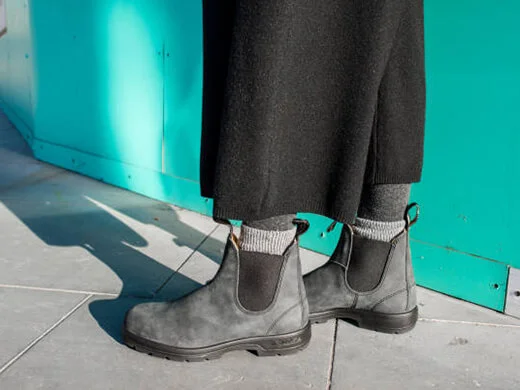
Quick Answer: Why are projects switching to Chelsea Safety Boots?
In high-pressure work environments, safety compliance is often a battle against time and convenience. The Chelsea safety boot (or slip-on safety boot) has become a favorite for project managers because it eliminates a common safety hazard: untied or loose laces. By providing a secure fit without the hassle of strings, these boots improve “correct wear” rates among staff, especially in roles requiring frequent transitions between indoors and outdoors.
🏗️ Who Are Chelsea Boots For? (Beyond the Fashion)
While they look sleek, safety shoes men and women wear in the Chelsea style are built for specific functional needs. As a senior operations manager, I see these boots performing best in three specific scenarios:
- The “Frequent Transition” Worker: If your safety shoes worker is constantly moving between the dusty construction site and the clean office/trailer, or jumping in and out of a truck cabin, laces are a time-sink. Slip-on boots allow for quick changes without compromising the schedule.
- Muddy and Wet Conditions: Laces are magnets for mud, concrete, and grime. Once laces are caked in dirt, they are difficult to tie and become a tripping hazard. Chelsea boots provide a smooth surface that is easy to hose down, making them ideal waterproof safety shoes for outdoor projects.
- Inspectors and Management: For those who need to visit multiple sites a day, the Chelsea style provides a professional look that fits both the boardroom and the trench.
⚠️ Potential Pitfalls: How to Avoid the “Cheap Slip-on” Trap
Not all slip-on boots are created equal. Because there are no laces to “tighten” the fit, the engineering of the boot must be superior. Here are the common risks you need to avoid when sourcing men’s shoes safety inventory:
- The “Loose Fit” Syndrome: If the elastic (the side gore) is low-quality, the boot will become loose within weeks. A loose boot leads to twisted ankles.
- Heel Slippage: Without laces to lock the foot back, a poorly designed heel cup will cause the foot to slide forward, smashing the toes against the safety composite shoes cap.
- Elastic Lifespan: In industrial environments, sparks or chemicals can degrade cheap elastic. You need industrial-grade gore that maintains its “snap.”
At VITOPPE, we address these by using high-tension elastic and reinforced heel counters to ensure the boot stays as snug as a lace-up.
📊 Comparison: Lace-up Boots vs. Chelsea Safety Boots
Choosing the right safety shoes men or women need depends on the specific job. Use this table for your next procurement meeting:
| Feature | Lace-up Safety Boots | Chelsea (Slip-on) Safety Boots |
|---|---|---|
| Speed (On/Off) | Slow (30-60 seconds) | Instant (2-5 seconds) |
| Fit Customization | High (Tighten at specific points) | Fixed (Depends on design & elastic) |
| Trip Hazard | Potential (Loose laces) | Zero (No laces) |
| Maintenance | Hard (Dirt traps in laces) | Easy (Smooth surface) |
| Ankle Support | Excellent (Mechanical tension) | Good (Depends on elastic quality) |
| Best For | Heavy climbing, uneven terrain | Logistics, driving, mud, frequent entry |
📋 Procurement Checklist: What to Look for in a Chelsea Boot
When you are looking for the best lightweight safety shoes in a Chelsea style, keep these four technical points in mind:
- Industrial Grade Elastic (Gore): Look for double-stitched, high-recovery elastic. It should feel stiff when new; if it’s too soft, it won’t last the month.
- Reinforced Heel Cup: A rigid internal heel counter is mandatory. This prevents the “flip-flop” effect and keeps the foot centered over the sole.
- Advanced Toe Caps: For safety shoes for women lightweight versions, we recommend safety composite shoes. Composite is lighter than steel and doesn’t conduct cold, which is a major factor in safety shoes comfort.
- Self-Cleaning Outsole: Since Chelsea boots are often used in mud, ensure the tread pattern is “open” so it ejects mud as you walk.
❓ FAQ: Common Questions from Site Managers
Q: Are Chelsea boots less secure than lace-ups? A: If they are certified to EN ISO 20345, they provide the same impact and puncture protection. The security comes from the quality of the fit. A well-fitted Chelsea boot will not fall off, even during a fall.
Q: How do I choose the right size for a slip-on? A: Since you can’t tighten them, sizing is critical. We recommend a “snug” fit initially. Leather will stretch slightly to fit the foot, but the elastic must remain firm.
Q: Can I get these for a female workforce? A: Absolutely. Safety shoes women’s styles in Chelsea designs are increasingly popular because they offer a narrower heel and a lightweight build that reduces leg fatigue during long shifts.
🔐 Quality You Can Verify
At VITOPPE, we don’t just talk about quality; we prove it. Whether you are ordering a thousand pairs of black safety shoes mens or specialized safety shoes women’s models, every boot is backed by data.
We provide CTC (France) and SGS (Switzerland) test reports upon request. These documents confirm that our Chelsea boots meet or exceed international standards for impact, compression, and slip resistance.
Don’t leave your project’s safety to chance. Choose a boot that your workers will actually want to wear correctly.
🚀 Take the Next Step
Ready to see how the VITO Chelsea series can improve your site compliance?