
Let’s be direct about one thing.
PPE is not optional. It’s not a suggestion. It’s not something you deal with “when there’s time.”
Personal protective equipment is a legal requirement in almost every industry, in almost every country. And when it’s missing — or worn out — people get hurt. Businesses face lawsuits. Operations shut down.
This guide covers everything employers need to know about PPE compliance — what it means, what categories matter, how global regulations work, and how to build a complete PPE program that actually protects your team.
What Is PPE?
PPE stands for Personal Protective Equipment. It’s any gear worn by a worker to reduce exposure to hazards on the job.
That includes:
- Hard hats and safety helmets
- Work gloves for hand protection
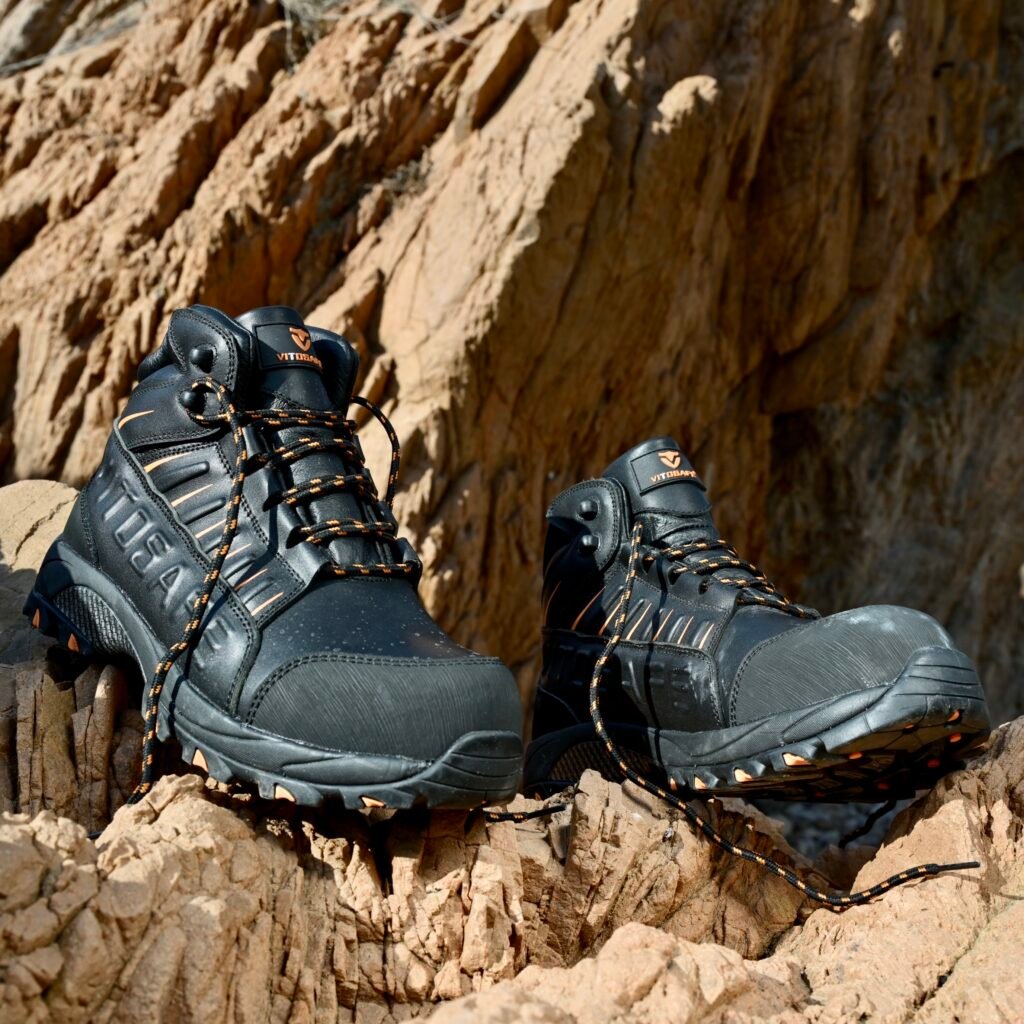
- Steel toe safety shoes, composite toe safety shoes, and gumboots
- Reflective safety clothing and high-visibility vests
- Eye protection, ear protection, and respiratory gear
PPE is the last line of defense. It doesn’t remove the hazard. It protects the person if the hazard reaches them.
That’s why everything else has to come first.
The PPE Hierarchy of Controls
Before reaching for PPE, safety professionals follow a five-level framework called the Hierarchy of Controls.
| Level | Action | Example |
|---|---|---|
| 1 | Eliminate the hazard | Remove the dangerous process entirely |
| 2 | Substitute with something safer | Replace a toxic chemical with a safer one |
| 3 | Engineering controls | Install machine guards or ventilation |
| 4 | Administrative controls | Rotate shifts, add warning signs |
| 5 | PPE | Safety shoes, gloves, helmets, clothing |
PPE sits at the bottom — not because it’s least important, but because it’s used when the hazard still exists after everything else is done. That makes proper PPE selection and quality absolutely critical.
PPE Categories & What VITOPPE Covers
Vitoppe is a one-stop PPE supplier based in Qingdao, China. We manufacture and export a full range of SGS-tested, CTC-certified protective equipment. Here’s how our product line maps to every major PPE category.
🦺 Body Protection — Reflective Safety Clothing
High-visibility is non-negotiable in construction, roadwork, and logistics.
Reflective safety clothing keeps workers visible to vehicles and equipment operators — day and night. Vitoppe’s hi-vis line includes vests, jackets, and full coverage suits built for outdoor and industrial environments.
🧤 Hand Protection — Work Gloves
Hands are the most frequently injured body part in the workplace.
Our work gloves line covers a range of hazards — cut resistance, chemical exposure, high heat, and general grip. Different jobs need different gloves. We help buyers find the right spec for their team.
👢 Foot Protection — Safety Shoes & Gumboots
This is where Vitoppe really shines.
Foot injuries are among the most costly workplace injuries. The right footwear makes an enormous difference. Here’s what we produce:
Steel Toe Safety Shoes Our steel toe safety shoes and safety steel toe shoes are built for heavy-duty environments. Steel caps handle high-impact and compression hazards — ideal for construction, manufacturing, and warehousing.
Composite Toe Safety Shoes Need something lighter? Our composite toe safety shoes and safety composite toe shoes use non-metal materials in the toe cap. They’re lighter than steel, non-conductive, and ideal for workers going through metal detectors or working in electrical environments.
Comfortable Safety Toe Shoes Protection doesn’t have to mean pain. Our comfortable safety toe shoes feature ergonomic insoles, padded collars, and wide toe box designs — because workers who wear comfortable gear actually keep it on all shift.
Gumboots Our gumboots (PVC rain boots) are built for wet, muddy, and chemically exposed environments. Waterproof, slip-resistant, and available in both standard and safety toe configurations — perfect for agriculture, food processing, fishing, and outdoor sites.
⛑️ Head Protection — Safety Helmets
Vitoppe’s safety helmet line covers standard hard hats and ventilated options for hot environments. All products go through rigorous impact and penetration testing before leaving our facility.
Global PPE Regulations: A Quick Overview
Laws differ by country. But the principle is the same everywhere — employers must assess risks and provide appropriate PPE.
Here’s a snapshot of the major frameworks:
| Region | Regulation | Key Requirement |
|---|---|---|
| 🇺🇸 United States | OSHA 29 CFR 1910.132 | Employers must conduct hazard assessments and provide PPE at no cost to workers |
| 🇬🇧 United Kingdom | HSE PPE at Work Regulations | PPE must be suitable, maintained, and properly used |
| 🇦🇺 Australia | Safe Work Australia | PPE must be selected based on risk assessment, workers must be trained |
| 🌍 European Union | EU PPE Regulation 2016/425 | PPE must be tested and certified before entering the EU market |
The details vary. But non-compliance carries serious consequences everywhere — fines, lawsuits, and operational shutdowns.
How to Conduct a PPE Risk Assessment: 5 Steps
Before you can choose the right PPE, you need to understand what you’re protecting against. Here’s a simple five-step process:
Step 1 — Identify the hazards Walk the worksite. What can hurt someone? Flying debris? Chemical splashes? Heavy falling objects? Slippery floors? Make a full list.
Step 2 — Determine who is at risk Not every worker faces the same hazards. Identify which roles or areas carry the highest exposure.
Step 3 — Evaluate the risk level How likely is each hazard to cause injury? How severe would that injury be? This helps you prioritize.
Step 4 — Select the right PPE Match your hazards to the right protection. High-impact zones need steel toe safety shoes or safety composite toe shoes. Wet environments need gumboots. Roadwork crews need reflective safety clothing. Never use generic PPE when a specific type is required.
Step 5 — Review and update regularly Hazards change. New equipment, new processes, new environments — your PPE program should evolve with them. Schedule reviews at least once a year.
PPE Training for Employees
Handing someone a pair of safety shoes is not enough.
Workers need to understand:
- Why each piece of PPE is required
- How to wear and adjust it correctly
- When to inspect it for damage
- How to report worn-out or broken gear
Untrained workers often skip PPE when it’s uncomfortable, misunderstood, or inconvenient. Training closes that gap. It also protects the employer legally — documented training shows due diligence.
The Real Cost of Non-Compliance
Some employers see PPE as an expense. Here’s the reality check.
In the US alone, workplace injuries cost employers an estimated $170 billion per year in direct and indirect costs. That includes medical bills, lost productivity, legal fees, and insurance premiums.
The average cost of a single foot injury claim? Over $9,000. A serious crush injury or fall? Tens of thousands — sometimes more.
Compare that to the cost of a quality pair of safety steel toe shoes or comfortable safety toe shoes from Vitoppe. The math is not even close.
Non-compliance doesn’t just cost money. It costs reputation, employee trust, and in the worst cases — lives.
One-Stop PPE Solution with VITOPPE
Here’s what makes Vitoppe different.
Most PPE suppliers specialize in one product category. You end up managing five different vendors, five different lead times, and five different quality standards. It’s inefficient and inconsistent.
Vitoppe covers everything under one roof:
✅ Safety shoes — steel toe, composite toe, comfortable designs, and specialty styles ✅ Gumboots — PVC rain boots for wet and chemical environments ✅ Work gloves — cut-resistant, general duty, and task-specific options ✅ Reflective safety clothing — high-visibility vests, jackets, and full suits ✅ Safety helmets — standard and ventilated hard hats
Why buyers choose Vitoppe:
- 🏭 Factory direct — we manufacture, not trade. That means better pricing and tighter quality control
- 🔬 SGS tested & CTC certified — third-party verified quality you can trust and document
- 📦 OEM & bulk order capability — custom branding, custom packaging, competitive pricing at volume
- ⏱️ Fast turnaround — samples in 7–10 days, bulk orders in 40–45 days
- 🌍 Global export experience — we ship to the US, Europe, Middle East, and beyond
- 💬 24-hour response — real people, real answers, fast
Whether you’re outfitting 10 workers or 10,000 — Vitoppe builds the program around your needs.
Final Thoughts
PPE compliance isn’t complicated. But it does require commitment.
Assess the hazards. Choose the right gear. Train your workers. And work with a supplier you can actually trust.
Vitoppe is here to make that easier. One supplier. One quote. Full coverage.
👉 Contact Vitoppe Today — Get a Free One-Stop PPE Quote →
Our team responds within 24 hours. Let’s build a safer workplace together.
Vitoppe — Full-Range PPE Supplier | SGS Tested | CTC Certified | Made in Qingdao, China