
Here’s a fact that surprises a lot of people.
Most safety shoes for work were originally designed for men. Women were an afterthought — if they were considered at all.
For a long time, the standard advice was simple: buy men’s shoes in a smaller size. That advice was wrong then. It’s still wrong now.
Female workers make up nearly half the workforce in many industries. Foot injuries at work are rising among women — not because the hazards are getting worse, but because too many women are still wearing the wrong footwear.
This guide changes that. Here’s everything you need to know to find ladies safety shoes that actually fit, actually protect, and actually feel good after a full shift.
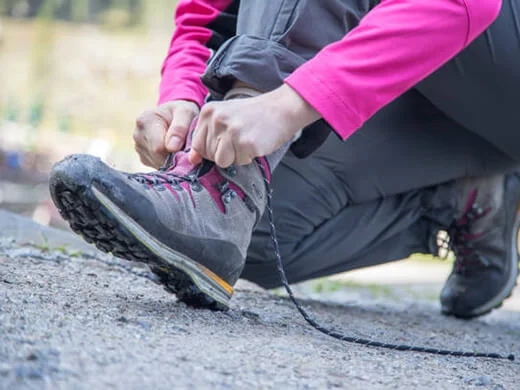
Why Women Need Specifically Designed Safety Shoes
Women’s feet are not the same as men’s feet — just smaller.
The differences are structural. And those differences matter a lot when you’re choosing female safety shoes.
Here’s what makes women’s feet different:
- Narrower heel. Women’s heels are proportionally narrower than men’s. A shoe built on a men’s last will slip at the heel — and that causes blisters fast.
- Wider forefoot relative to heel. Women’s feet tend to be wider at the ball compared to the overall foot length. Men’s shoes often squeeze the front of the foot even when the heel fits.
- Lower arch. Women generally have a lower arch profile. Without proper arch support, long shifts mean foot pain — and over time, that becomes knee and back pain.
- Smaller overall volume. Men’s shoes scaled down don’t match women’s foot shape. The toe cap ends up in the wrong position. The insole doesn’t support the right points.
What happens when women wear men’s safety shoes:
- Blisters from heel slippage
- Foot fatigue that sets in hours earlier than it should
- Toe pain from a cap that sits too far forward
- Ankle instability from poor lateral support
- Long-term joint problems from misaligned footwear
The bottom line is simple. Womens safety toe shoes need to be built on women’s lasts — not men’s lasts in a smaller size. Full stop.
Key Features to Look For
When shopping for safety shoes, these are the features that separate a good women’s shoe from a great one.
✅ Women-Specific Last (Foot Shape)
This is the single most important factor. A last is the mold used to build the shoe. Women’s lasts are shaped differently from men’s. If the shoe isn’t built on a women’s last, everything else is a compromise.
Always ask: Was this shoe designed for women, or just resized from a men’s model?
✅ Lightweight Construction
Weight is a big deal for anyone on their feet all day. It’s especially important for women’s safety shoes for work.
Lightweight safety shoes for womens — under 500 grams per shoe — reduce fatigue significantly over a long shift. Look for shoes that use composite toe caps instead of steel, EVA or PU midsoles, and breathable synthetic uppers. Every gram you save on your feet translates to real energy saved over an 8-hour day.
At Vitoppe, our light safety shoes for womens are engineered specifically to cut weight without cutting protection. SGS tested. CTC certified. Genuinely light.
✅ Wide Toe Box
Here’s one many buyers overlook. Wide toe box safety shoes give your toes room to sit naturally — not squeezed together.
A cramped toe box causes blisters, bunions, and nerve pain over time. For women who are on their feet all shift, that’s not a small thing. It’s the difference between finishing strong and limping to the car.
✅ Cushioned, Supportive Insole
Comfortable safety toe shoes start from the inside. Look for memory foam or ergonomic insoles that support the arch and absorb impact. Insoles that compress flat after a few weeks aren’t doing their job.
Pro tip: Even if the factory insole is average, a quality aftermarket insole can transform how a shoe feels. But starting with good cushioning built in is always better.
✅ Breathable Lining
Feet sweat. That’s not a design flaw — it’s biology. A shoe with a breathable moisture-wicking lining keeps feet drier, cooler, and less prone to fungal issues. For women working in warm environments or doing physical work, breathability matters.
✅ Steel Toe vs. Composite Toe — Which Is Right for You?
Both options work. The right choice depends on your job.
- Steel toe: Maximum impact protection. Slightly heavier. Best for construction, heavy manufacturing, and warehouse environments with crush risks.
- Composite toe: Lighter weight. Non-conductive. Ideal for electrical work, food processing, or anyone who values comfort on long shifts.
For most women in light-to-medium duty environments, composite toe is the more comfortable daily choice. For heavy industry, womens safety toe shoes with steel toe caps deliver the highest level of protection.
Safety Shoe Styles for Women
Not every job needs the same shoe. Here’s how to match the style to the work.
👟 Low-Cut Safety Shoes
Best for: Warehouse work, retail, food processing, office environments with safety requirements.
Low-cut shoes offer freedom of movement and breathability. They’re easier to put on and take off. Most women in indoor or light industrial environments do well with a low-cut style.
🥾 Mid-Cut Safety Shoes
Best for: Construction, outdoor sites, uneven terrain.
Mid-cut shoes wrap the ankle. That extra support matters when you’re walking on gravel, climbing ladders, or standing on uneven surfaces all day.
🥾 Safety Rain Boots (Gumboots)
Best for: Agriculture, food processing plants, chemical environments, outdoor work in wet conditions.
For women working in wet or chemically exposed environments, a waterproof safety shoes boot — like Vitoppe’s PVC gumboot line — is the most complete protection available.
👔 Dress Safety Shoes
Best for: Supervisors, inspectors, or workers in environments with dress code requirements.
Yes, they exist. Protected toe caps in a clean, professional design. You don’t have to choose between looking professional and being safe.
Common Mistakes Women Make When Buying Safety Shoes
Avoid these — they’re more common than you’d think.
❌ Mistake 1: Buying men’s shoes in a smaller size Already covered this — but it bears repeating. Men’s lasts and women’s lasts are fundamentally different. Smaller is not the same as correct.
❌ Mistake 2: Ignoring arch support It feels fine in the store. It doesn’t feel fine at hour six of a shift. Always check the insole quality before you buy.
❌ Mistake 3: Prioritizing looks over protection A shoe that looks great but offers minimal protection isn’t a safety shoe — it’s a regular shoe with a safety label. Check that the product you’re buying has real third-party testing behind it. SGS testing and CTC certification are your proof points.
❌ Mistake 4: Buying too tight “because they’ll stretch” Safety shoes don’t stretch the way casual shoes do. The toe cap especially has no give. Buy the right size from day one.
❌ Mistake 5: Ignoring safety toe shoe covers as a temporary solution Safety toe shoe covers are a practical short-term option — they slip over existing footwear to add toe protection in low-risk environments. But they’re not a long-term substitute for proper footwear. Use them as a bridge, not a permanent fix.
Vitoppe’s Women’s Safety Shoe Collection
At Vitoppe, we don’t resize men’s shoes and call them women’s. We build from scratch — on women’s lasts, for women’s feet.
Here’s what our women’s line includes:
👟 Lightweight Safety Shoes for Womens Our most popular women’s styles come in under 500g per shoe. Composite toe cap. Breathable mesh or synthetic upper. Memory foam insole. Slip-resistant outsole. Built for all-day comfort without giving up protection.
👞 Leather Safety Shoes — Women’s Styles For women who need durability and a more professional look, our leather safety shoes line delivers. Full-grain and split-grain leather uppers. Reinforced toe cap. Oil-resistant outsole. Clean enough for a site office. Tough enough for a job site.
🥾 Wide Toe Box Safety Shoes Our wide-fit women’s styles give feet the room they need. No compression. No squeeze. Proper toe positioning under the protective cap. A better fit from the first wear.
👟 Comfortable Safety Toe Shoes — Women’s Line Ergonomic insoles. Padded collar. Flexible midsole. These are designed for women who spend full shifts on their feet and need footwear that keeps up.
All Vitoppe women’s safety shoes are:
- ✅ SGS tested — third-party verified, not just self-certified
- ✅ CTC certified — independently validated quality
- ✅ Factory direct — no middleman, better pricing for bulk orders
- ✅ OEM/ODM available — custom branding and packaging for business buyers
And because we know workforces aren’t one-size-fits-all — we also carry a full range of men’s safety shoes and men’s safety toe athletic shoes for mixed-gender teams. One supplier. One order. Full coverage.
How to Get the Right Fit — Sizing Tips
Getting the right size makes everything else work better. Here’s how to do it correctly.
Step 1 — Measure in the afternoon Feet swell throughout the day. Measuring in the morning means you might buy too small. Measure in the afternoon when your feet are at their largest.
Step 2 — Measure both feet Most people have one foot slightly larger than the other. Always fit to the larger foot.
Step 3 — Measure length AND width Use a ruler or tape measure. Length from heel to longest toe. Width across the widest part of the forefoot. Both numbers matter.
Step 4 — Check the toe cap clearance With the shoe on, press the toe area. There should be about a thumb’s width of space between your longest toe and the protective cap. Too close means the cap will press on your toes. Too far means the shoe will shift when you walk.
Step 5 — Walk before you commit Take a few laps. The heel should stay put. The toe box shouldn’t squeeze. The insole should feel supportive — not flat or hard.
Not sure about sizing? Contact the Vitoppe team directly. We’ll help you get the right size for your foot measurements — and we can provide sizing guides for bulk orders across mixed-gender teams.
The Bottom Line
Women deserve safety shoes built for women. Not scaled-down men’s shoes. Not compromises.
The right female safety shoes fit correctly, weigh less, support your arch, and give your toes room to breathe — all while delivering the same level of protection as any men’s shoe on the market.
Vitoppe builds exactly that. SGS tested. CTC certified. Designed for women’s anatomy. Priced factory direct.
Whether you need one pair or a bulk order for your whole team — we’ve got you covered.
👉 Shop Vitoppe Women’s Safety Shoes →
Or contact our team for sizing guidance, bulk quotes, or OEM inquiries. We respond within 24 hours.
Vitoppe — Professional Safety Footwear for Women & Men | SGS Tested | CTC Certified | Factory Direct from Qingdao, China