
Mid-Cut vs. High-Cut Safety Boots: Which Provides the Best Protection and Comfort?
Quick Answer: Choosing between boot heights depends entirely on your terrain and movement needs. High cut work boots are superior for uneven outdoor terrain where maximum stability and protection against debris are required. In contrast, mid cut safety boots are the better choice for indoor manufacturing or logistics roles that require high frequency of walking, crouching, and bending, offering a balance of protection and flexibility.
At VITOPPE, we manufacture a wide range of industrial footwear verified by CTC and SGS. We understand that the height of your boot isn’t just a style choice—it is a critical safety feature that can prevent long-term joint injury and acute accidents.
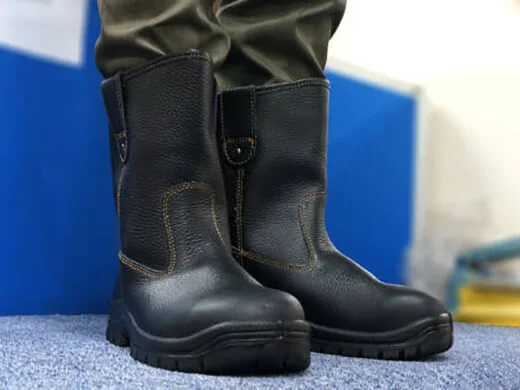
Understanding Common Workplace Ankle Injuries
The ankle is one of the most vulnerable parts of the body on a job site. According to industrial safety statistics, ankle sprains and fractures account for a significant percentage of lost-time injuries. Common hazards include:
- Lateral Twists: Stepping on a loose rock or a stray tool on a construction site can cause the ankle to roll outward, tearing ligaments.
- Debris Entry: Low-cut shoes often allow hot sparks, metal shards, or sharp gravel to enter the shoe, causing secondary injuries.
- Impact Trauma: Heavy equipment or pallet jacks can strike the protruding ankle bone (malleolus), leading to severe bruising or bone chips.
To mitigate these risks, selecting the correct level of ankle support safety boots is essential.
Comparing Mid-Cut vs. High-Cut Boots
The height of a boot changes its biomechanical impact on your walk. Below is a detailed breakdown of how mid cut safety boots compare to their high-top counterparts.
Comparison Table: Mid-Cut vs. High-Cut
| Feature | Mid-Cut Safety Boots | High-Cut Work Boots |
|---|---|---|
| Ankle Height | Sits at or just above the ankle bone. | Extends 6 to 10 inches up the leg. |
| Ankle Support | Moderate; allows for natural rotation. | Maximum; locks the ankle in place. |
| Flexibility | High; ideal for crouching/bending. | Lower; focuses on stability. |
| Weight | Lighter; reduces leg fatigue. | Heavier; due to extra material. |
| Debris Protection | Good. | Elite (Best for sand, sparks, mud). |
| Primary Industry | Logistics, Assembly, Warehouse. | Construction, Mining, Oil & Gas. |
| Certification | Verified by CTC & SGS. | Verified by CTC & SGS. |
When to Choose Mid-Cut Safety Boots
Mid cut safety boots are the “all-rounders” of the industrial world. They typically cover the ankle bone, providing a layer of padding against lateral impacts while leaving the Achilles tendon relatively free to move.
Best for:
- Logistics & Warehousing: If your job involves jumping in and out of truck cabs or walking 15,000 steps on flat concrete, the lighter weight and flexibility of a mid-cut boot will prevent fatigue.
- Indoor Manufacturing: For workers who spend time kneeling or crouching to maintain machinery, a mid-cut boot won’t “dig into” the calf or shins.
- Technicians & Electricians: Provides enough protection for climbing ladders while remaining agile enough for tight spaces.
When to Choose High-Cut Work Boots
High cut work boots are designed for the most demanding environments. By wrapping the lower leg, these boots act almost like a soft cast, preventing the ankle from rolling even when walking on unstable, rocky, or muddy surfaces.
Best for:
- Heavy Construction: When navigating rebar, trenches, and uneven soil, the superior ankle support safety boots provided by high-cut models are a life-saver.
- Welding and Metalwork: The high collar ensures that hot slag or sparks cannot drop into the boot.
- Forestry and Outdoor Maintenance: Offers protection against thick brush, snake bites, and moisture in deep mud.
Key Fitting Tips for Maximum Ankle Support
Regardless of the height you choose, if the boot doesn’t fit properly, the protection is compromised. When trying on ankle support safety boots, follow these rules:
- The Heel Lock: Your heel should not lift more than a few millimeters when you walk. If your heel slips, your ankle isn’t secure.
- The Flex Point: The boot should bend at the ball of your foot, not in the middle of the arch.
- Collar Padding: Ensure the top of the boot (the collar) is well-padded. A high-cut boot without a padded collar can cause painful chafing on the lower calf.
- Lacing Strategy: For high-cut boots, use the “heel lock” lacing technique to ensure the foot stays pushed back into the heel cup, maximizing the efficiency of the ankle support.
The VITOPPE Advantage: Quality You Can Trust
At VITOPPE, we don’t just sell boots; we engineer safety solutions. Our mid and high-cut series are built to withstand the rigors of global industry.
- Verified Reliability: All our footwear undergoes rigorous testing at CTC and SGS laboratories to ensure the materials meet the highest standards for tear strength, impact resistance, and slip prevention.
- Customization (OEM/ODM): We provide professional B2B services, allowing you to customize colors, branding, and closure systems—such as traditional laces or advanced dial-lace systems—for your entire workforce.
- Advanced Ergonomics: We use high-grade microfiber and genuine leather to ensure that even our high cut work boots remain breathable and as light as possible.
Conclusion: Make the Right Move for Your Feet
The choice between a mid cut safety boot and a high cut work boot comes down to the environment you face every day. Do you need the freedom to move, or the stability to stand firm?
Choosing the right ankle support safety boots is an investment in your health and your career. By reducing the risk of twists and sprains, you stay on the job longer and finish your shift with less pain.
Ready to find the perfect fit for your team?
Contact VITOPPE Today to receive our “Boot Selection Guide for Construction & Logistics” or to request a Free Sample for your next procurement cycle. Experience the difference of CTC and SGS-verified protection.