
Safety shoes in the food industry must bridge the gap between worker protection and stringent hygiene standards like HACCP. Unlike traditional workwear safety shoes, food-grade footwear prioritizes slip resistance (SRC), easy-to-clean materials (microfiber), and chemical resilience. VITOPPE offers professional-grade work safety shoes verified by CTC and SGS, ensuring global compliance and maximum comfort for both men and women in the food processing sector.
1. Navigating Foot Hazards in Food Processing
In food production facilities, the floor is often a high-risk zone. Whether it’s a dairy plant, a slaughterhouse, or a bakery, a standard safety work shoe is often insufficient. Workers face four primary hazards:
- Slippery Surfaces: Water, animal fats, and oils create a “skating rink” effect. High slip-resistance is non-negotiable.
- Chemical Exposure: Constant floor cleaning with harsh sanitizers can degrade low-quality work shoes safety toe materials.
- Impact Risks: Heavy crates, pallet jacks, and machinery require a robust safety shoes steel toe or composite toe for protection.
- Low Temperatures: In cold storage or industrial freezers, maintaining warmth is as vital as the grip.
2. Special Requirements for Food Grade Safety Footwear
What makes a shoe “food-safe”? It’s more than just being waterproof. It’s about the architecture of the shoe.
Hygiene-First Design
Traditional laces can trap bacteria and organic matter. This is why slip on safety shoes are the industry standard for high-care zones. Their seamless design allows for rapid cleaning and reduces the risk of cross-contamination.
Material Choice: Microfiber vs. Leather
While men’s safety shoes in construction often use heavy leather, the food industry prefers high-tech microfiber. Why? Because microfiber is more resistant to animal fats and acids, and it doesn’t crack as easily after repeated washing.
Table: Comparison of Safety Footwear Types
| Feature | Standard Industrial Shoes | Food Industry Safety Shoes |
|---|---|---|
| Common Style | Lace-up boots | Slip on safety shoes / Clogs |
| Material | Natural Leather / Mesh | Water-resistant Microfiber |
| Toe Protection | Safety shoes steel toe | Steel or Composite Toe |
| Cleaning | Surface wipe | Washable & Sanitizer resistant |
| Slip Resistance | Basic / SRA | Professional SRC (Soap/Glycerine) |
| Certification | General Industrial | CTC & SGS Verified |
3. The Science Behind White Safety Shoes
Why is white the dominant color in food processing? It’s not about style; it’s about contamination visibility.
White workwear safety shoes make it impossible to hide dirt. In a facility following HACCP (Hazard Analysis and Critical Control Points) protocols, being able to see even a tiny speck of blood or dough on a worker’s female safety shoes or safety men shoes is the first line of defense in food safety audits. It ensures that the footwear is sanitized daily, maintaining the highest hygiene standards.
4. Cold Storage: Staying Safe and Warm
Working in a cold room or a blast freezer requires specialized comfortable safety shoes. In these environments, a standard sole can harden and lose its grip.
VITOPPE’s cold-storage work safety shoes use a unique rubber compound that remains flexible at sub-zero temperatures. Furthermore, we provide a full range of sizes for women’s safety shoes and men’s safety shoes, ensuring every team member has a snug, insulated fit that prevents frostbite while maintaining professional-grade toe protection.
5. Cleaning and Disinfection Protocols
To ensure your work shoes safety toe remain compliant, a strict maintenance routine is essential:
- Mechanical Cleaning: Use a soft brush to remove debris from the tread.
- Disinfection: Dip or spray the shoes with a chlorine or quaternary ammonium-based sanitizer.
- Drying: Ensure they are dried in a ventilated area.
- Inspection: Regularly check the soles for wear; a worn-down tread means the slip-resistance is compromised.
6. VITOPPE: Your Trusted Partner for Food Industry Footwear
As a specialized PPE manufacturer, VITOPPE understands that one size does not fit all. Our collection is designed with gender-specific ergonomics in mind:
- For the Female Workforce: We offer specialized ladies safety shoes and female safety shoes that are narrower and lighter, reducing fatigue during long shifts on the production line.
- For the Male Workforce: Our men’s safety shoes and safety men shoes provide rugged durability for heavy-duty lifting and warehouse operations.
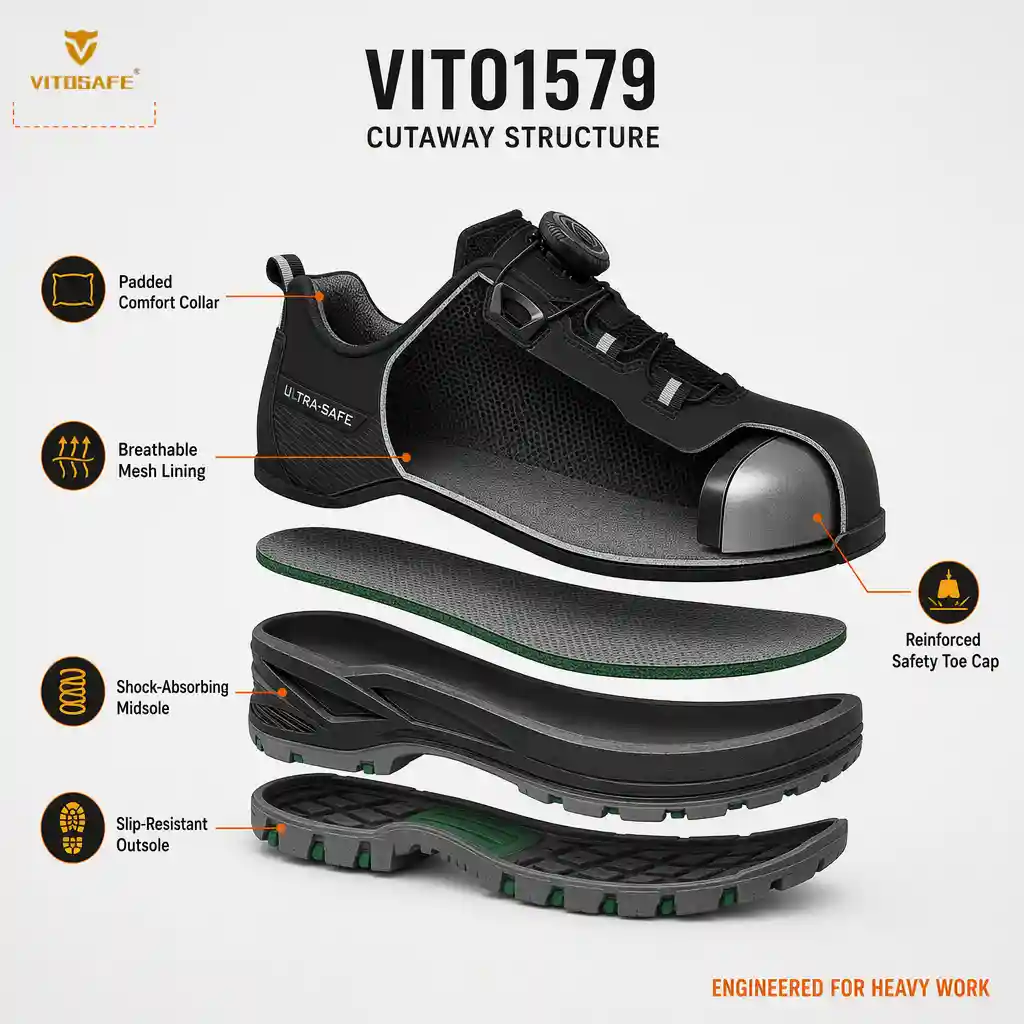
- The Comfort Factor: All our models are engineered as comfortable safety shoes, featuring moisture-wicking linings and cushioned insoles to support workers who stand for 8-12 hours a day.
Verified by Global Authorities
At VITOPPE, we don’t just claim quality—we prove it. Our food industry series is rigorously tested and verified by CTC and SGS. These certifications guarantee that our shoes meet international standards for impact resistance, slip prevention, and material safety, giving you peace of mind during regulatory inspections.
Conclusion: Elevate Your Food Safety Standards
Choosing the right safety work shoe is a critical investment in your company’s safety culture. By selecting VITOPPE’s specialized food-grade footwear, you are protecting your staff from slips and crushed toes while protecting your consumers from contamination.
Whether you need a thousand pairs of slip on safety shoes for a new factory or specialized ladies safety shoes for your QC team, VITOPPE is ready to deliver.
Let’s build a safer, cleaner industry together.