
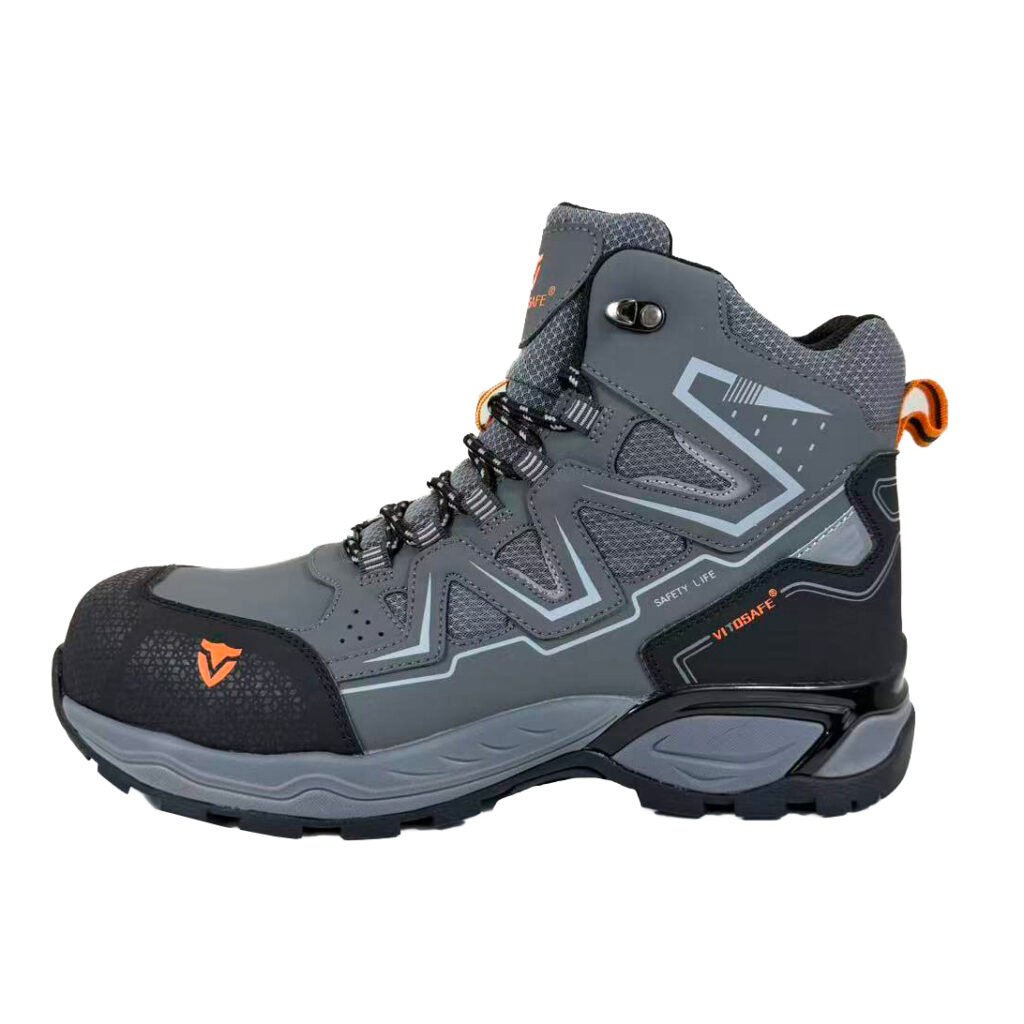
Heavy, clunky safety boots used to be the only option. Not anymore.
Walk into any modern warehouse or logistics hub today, and you’ll notice something different — workers wearing shoes that look more like running sneakers than industrial footwear. This isn’t a fashion trend. It’s a shift driven by real workplace data, and it’s changing what buyers expect from a safety toe shoe.
Let’s look at why this is happening, and how to make sure you’re buying the real thing — not just something that looks the part.
Why Safety Sneakers Are Suddenly Everywhere
Three things are driving this shift:
1. Workers actually want to wear them. Younger employees — especially those aged 25 to 40 — expect their gear to feel as good as it protects. If a shoe is uncomfortable, workers find ways around it: loosening laces, skipping shifts in proper footwear, or complaining constantly. Ultra lightweight safety shoes solve this problem at the source.
2. HR teams care about compliance rates, not just compliance rules. A safety shoe sitting unused in a locker doesn’t protect anyone. When footwear is genuinely comfortable, workers wear it correctly, for longer, without cutting corners. That’s a real safety outcome, not just a paperwork checkbox.
3. Warehousing and e-commerce logistics have exploded. Amazon-style fulfillment centers, Shopee warehouses, and light manufacturing floors don’t need heavy-duty boots built for construction sites. They need something workers can wear for a 10-hour shift without foot fatigue.
Safety Sneakers vs Traditional Safety Boots
Here’s how they actually compare:
| Feature | Traditional Safety Boots | Safety Sneakers |
|---|---|---|
| Weight | Heavy (800g+) | Light (400–600g) |
| Breathability | Average | Excellent (mesh upper) |
| Look | Industrial, bulky | Sporty, modern |
| Protection Rating | S1P / S3 | S1P / S1 |
| Best Suited For | Heavy industry, outdoor sites | Warehousing, light industry, logistics |
| Certification | CTC / SGS | CTC / SGS (same standard) |
The key takeaway: safety sneakers aren’t a “lighter version” of protection. They’re built to the same certification standards — just designed for different working conditions.
⚠️ Warning: Looking Safe Isn’t the Same as Being Safe
Here’s the part buyers need to pay attention to.
The market is flooded with sneaker-style shoes that look like safety footwear but have never been through any certified testing. No toe cap. No slip resistance testing. Nothing. Just a steel-toe logo printed on the box.
If you’re sourcing for your team — or if you’re one of many safety shoes distributors supplying retailers — this is the check you cannot skip.
How to confirm a safety sneaker is actually certified:
- ✅ Ask for a CTC or SGS test report — not a photo, not a PDF with no report number, the real document.
- ✅ Check the label inside the shoe for EN ISO 20345 marking.
- ✅ Verify the report number directly on the CTC or SGS website. If the supplier hesitates or can’t provide this, that’s your answer.
At VITOPPE, every safety sneaker we produce — whether it’s a mens safety toe shoes style or a ladies safety shoe version — goes through the same testing as our traditional boots. Tested by CTC (France) and SGS (Switzerland). Reports available on request, always.
Who Should Be Switching to Safety Sneakers?
Not every job site needs this style, but a lot more than you’d think do:
📦 E-commerce Warehouses Amazon-style and Shopee fulfillment centers are the biggest adopters. Workers walk 15,000+ steps a shift — comfort directly affects productivity.
🏭 Light Manufacturing Assembly lines, electronics factories, packaging plants. No heavy impact risk, but still need toe protection and slip resistance.
🛒 Retail Back-of-House Supermarket stockrooms and retail warehouses — where shoes safety men and women need are less about heavy-duty protection, more about all-day comfort.
✈️ Airport Ground Support (Non-Heavy Zones) Baggage handling and light ground crew roles benefit from lightweight, breathable footwear that doesn’t slow workers down.
If your team is doing heavy lifting, working around falling objects, or on rough terrain — stick with traditional boots. Safety sneakers are built for movement-heavy, lower-impact environments.
What About Women’s Sizing?
This is where a lot of suppliers fall short. Most “unisex” safety sneakers are just men’s shoes in smaller sizes — wrong fit, wrong support, uncomfortable after a few hours.
Proper safety shoes women need a narrower heel, higher arch support, and a true women’s last (shoe mold), not a scaled-down men’s design. Womens steel toe safety shoes and composite versions should be designed specifically around female foot shape — not just resized.
VITOPPE offers dedicated women’s lines built on a proper female last, tested to the same EN ISO 20345 standard as our men’s range.
Buying in Bulk? Here’s What We Recommend
If you’re placing a large order — whether for your own workforce or as one of the safety shoes distributors stocking for retail clients — don’t skip these two steps:
- Request samples first. Have a small group of workers wear them for a full week before committing to a bulk order. Comfort feedback from real use beats any spec sheet.
- Standardize certification across the batch. If you’re ordering multiple styles or colors — including popular black safety toe shoes — make sure every single style carries the same CTC/SGS certification. Don’t assume consistency across a product line without checking.
VITOPPE Safety Sneaker Range
We manufacture a full range of certified safety sneakers, including:
- Composite safety shoes for men — lightweight, non-metallic toe, ideal for logistics and light industry
- Mens safety toe shoes — sporty design with full CTC/SGS certification
- Ladies safety shoe styles — built on a true women’s last, not resized men’s shoes
- Black safety toe shoes — our most requested colorway for corporate and retail environments
Every pair is tested by:
- 🇫🇷 CTC (France) — footwear-specific lab testing
- 🇨🇭 SGS (Switzerland) — globally recognized third-party certification
Frequently Asked Questions
Q: Are safety sneakers as protective as traditional boots? Yes, when properly certified. Look for EN ISO 20345 marking and CTC/SGS test reports — the protection level is the same, just packaged in a lighter, more breathable design.
Q: Can women wear the same safety sneakers as men? They can, but it’s not ideal. A true ladies safety shoe is built on a different last with proper arch and heel support. Unisex sizing often leads to discomfort and reduced compliance.
Q: What industries should avoid safety sneakers? Heavy construction, mining, and any environment with high impact or puncture risk should stick to traditional S3-rated boots.
Q: How do I know if a supplier’s certification is real? Ask for the report number and check it directly on the official CTC or SGS website. A legitimate certificate can always be traced back.
Q: Do you offer safety sneakers for distributors in bulk? Yes. We work with safety shoes distributors globally and offer sample runs before full production orders.
Ready to Try a Sample?
Tell us your team size, preferred styles (including black safety toe shoes), and target market — we’ll send samples within 15 working days along with our CTC and SGS reports.
VITOPPE — Qingdao Vitosafe Footwear Co., Ltd. | Certified by CTC (France) & SGS (Switzerland)