
When shopping for safety footwear, you’ll encounter prices ranging from $50 to well over $200 per pair. What justifies this dramatic price difference? More importantly, how do you determine which safety shoes offer genuine value versus those that simply appear cheap?
Let’s break down the key factors that influence safety shoe pricing—and why the lowest price tag often leads to the highest total cost.
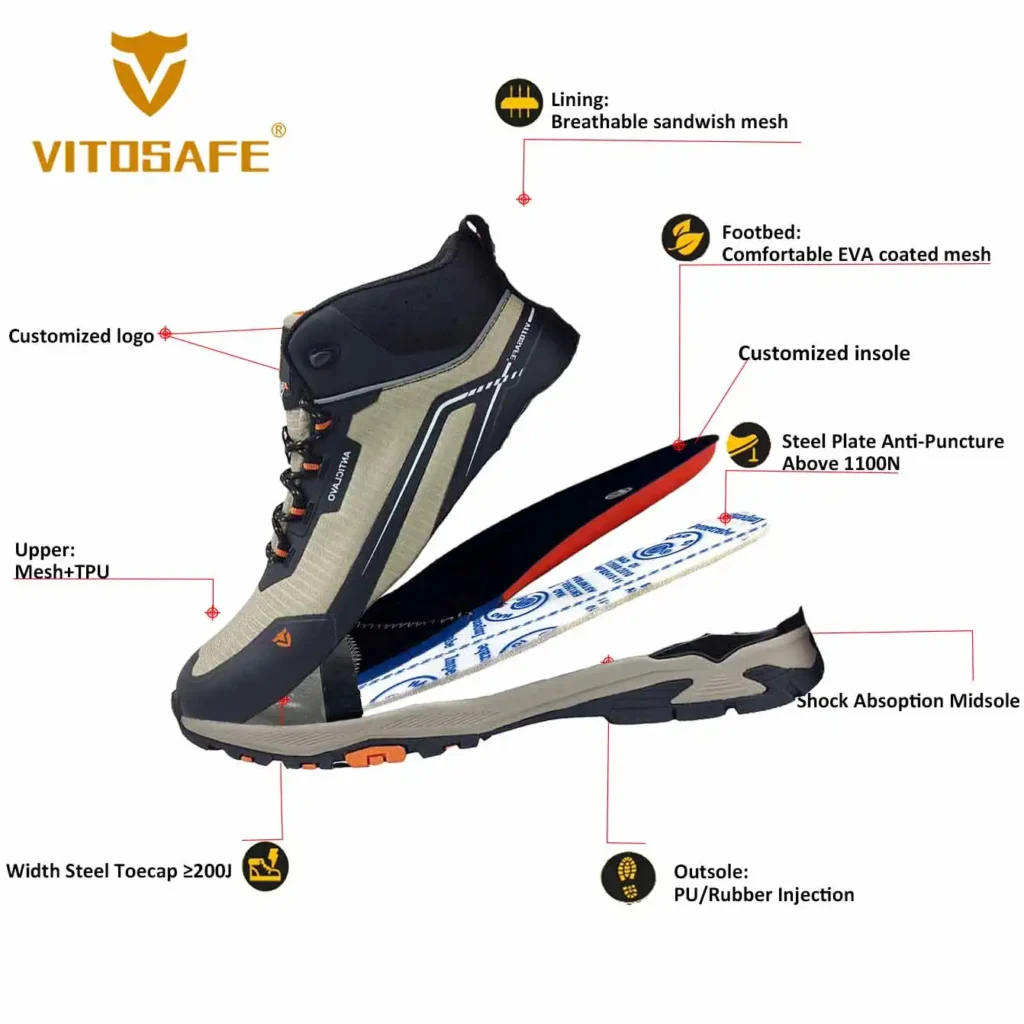
What Goes Into the Cost of Safety Shoes?
1. Upper Materials
The visible part of the shoe tells only half the story.
- Synthetic leather: Budget-friendly, basic durability ($50-80 range)
- Full-grain leather: Mid-range pricing, superior breathability and flex ($90-130)
- Nubuck leather: Premium cost, exceptional durability and comfort ($130-170)
- Specialized fabrics: High-end pricing for specific needs—waterproof membranes, heat resistance, chemical protection ($150-250+)
Cost Impact: Upper materials account for 25-35% of total shoe cost. Premium leathers last 2-3 times longer than synthetic alternatives and conform better to feet, reducing fatigue and blisters.
2. Safety Toe Construction
Not all protective toes are created equal.
- Steel toe: Traditional, heavy, economical
- Composite toe: Lighter, non-conductive, mid-range price
- Aluminum alloy: Lightweight, thinner profile, premium cost
- Carbon fiber: Cutting-edge, maximum comfort, highest price
Cost Impact: Upgrading from steel to composite adds $15-25 per pair. Carbon fiber can add $40-60. But lighter toes reduce leg fatigue—workers wearing composite toes report 30% less end-of-day foot pain.
3. Sole Technology
The foundation of safety and comfort starts from the ground up.
- Basic rubber outsole: Adequate traction, minimal cushioning
- Dual-density midsole: Enhanced shock absorption, better arch support
- EVA/PU combination: Superior comfort for all-day wear
- Slip-resistant compounds: Specialized tread patterns, advanced rubber formulations
- Puncture-resistant plates: Steel vs. composite materials
Cost Impact: Advanced sole systems add $20-40 to manufacturing costs but can prevent 60-80% of slip-and-fall incidents and reduce repetitive stress injuries.
4. Manufacturing Process & Construction
How shoes are built determines how long they last.
- Cement construction: Cheapest, sole glued to upper, limited repairability
- Direct attach: Mid-range, sole molded directly to upper, good durability
- Goodyear welt: Premium construction, fully rebuildable, maximum lifespan
- Stitching quality: Double vs. single stitching at stress points
- Seam sealing: Waterproofing processes
Cost Impact: Goodyear welt construction adds $30-50 per pair but enables professional resoling—extending shoe life from 6 months to 3+ years.
5. Comfort & Ergonomic Features
Worker productivity depends on all-day comfort.
- Moisture-wicking linings: Keep feet dry, prevent odor and blisters
- Anatomical footbeds: Proper arch support, shock absorption
- Padded collars and tongues: Ankle comfort, prevent chafing
- Shank support: Prevents midfoot fatigue during long shifts
- Climate control: Breathable vs. insulated options
Cost Impact: Advanced comfort features add 20-30% to base price but increase worker compliance and reduce fatigue-related errors.
6. Safety Certifications & Testing
Meeting safety standards requires rigorous validation.
- ASTM F2413 compliance (impact, compression, puncture resistance)
- Electrical hazard protection testing
- Slip resistance certification (ASTM F2913)
- Metatarsal guards for additional foot protection
- Chemical resistance validation
- Third-party certification fees
Cost Impact: Comprehensive testing and certification add $8-15 per pair, but they guarantee the protection level employers and workers depend on—and OSHA requires.
7. Specialized Protection Features
Industry-specific hazards demand specialized solutions.
- Waterproof membranes (Gore-Tex, proprietary systems): +$25-45
- Electrical hazard protection: +$15-25
- Static dissipative (ESD) properties: +$20-35
- Heat/cold insulation: +$15-30
- Chemical-resistant materials: +$30-50
- Metatarsal guards: +$20-40
Cost Impact: Each specialized feature adds to the cost but prevents specific injuries. One avoided injury pays for decades of premium footwear.
8. Durability Engineering
Purpose-built to withstand workplace abuse.
- Reinforced toe and heel counters
- Abrasion-resistant overlays at high-wear zones
- Oil and chemical-resistant materials
- UV-resistant treatments for outdoor wear
- Hardware quality (eyelets, laces, zippers)
Cost Impact: Durability features increase initial cost by 25-40% but extend wearable life by 200-400%.
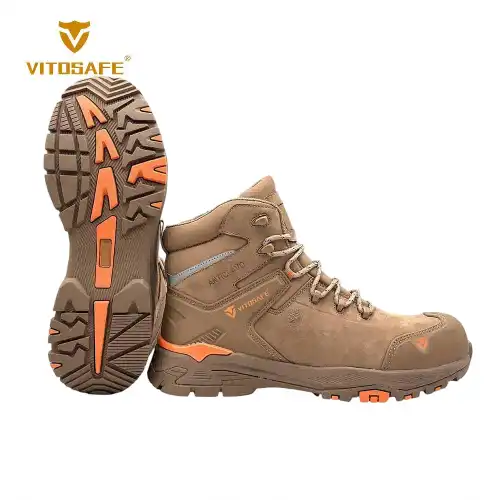
The Hidden Costs of Cheap Safety Shoes
Rapid Replacement Cycle
A $60 pair that lasts 3 months costs far more than $150 shoes that last 18 months.
Real Cost Example:
- Budget shoes: $60 × 4 pairs/year = $240/year per worker
- Quality shoes: $150 × 0.67 pairs/year = $100/year per worker
Savings: $140 per worker annually
Injury-Related Expenses
Inadequate footwear protection leads to:
- Crushed toes: Average claim $15,000-$25,000
- Slip and falls: Average claim $20,000-$40,000
- Puncture wounds: Medical costs + lost time $8,000-$15,000
- Repetitive stress injuries: Chronic issues costing $30,000-$60,000
- OSHA violations: Fines starting at $7,000-$14,000 per incident
One preventable injury can cost 100-500 times the price difference between cheap and quality safety shoes.
Productivity Loss
Poor-fitting or uncomfortable safety shoes cause:
- Slower movement: Workers pace themselves to reduce pain
- More breaks: Frequent sitting to rest sore feet
- Reduced focus: Discomfort diverts attention from tasks
- Early fatigue: Energy spent compensating for poor support
- Non-compliance: Workers switching to unauthorized footwear
Studies show proper safety footwear can improve productivity by 12-18% and reduce absenteeism by up to 25%.
Employee Morale & Retention
Uncomfortable safety shoes affect worker satisfaction:
- Lower job satisfaction scores
- Higher turnover rates (replacement costs average $4,000-$7,000 per worker)
- Reduced willingness to work overtime
- Negative workplace culture
Calculating True Value: Cost Per Wear
Don’t evaluate safety shoes on purchase price alone. Use this formula:
Cost Per Day = (Price Per Pair) ÷ (Days of Wearable Life)
Real-World Comparison:
| Shoe Category | Purchase Price | Wearable Life | Cost Per Day | Annual Cost* |
|---|---|---|---|---|
| Budget | $65 | 90 days | $0.72 | $263 |
| Mid-Range | $120 | 270 days | $0.44 | $161 |
| Premium | $180 | 540 days | $0.33 | $121 |
*Based on 365-day work year
The most expensive shoe costs less than half the budget option to wear daily.
Additional Factors Affecting Total Cost
Maintenance & Care
- Budget shoes: Often non-repairable, disposable
- Mid-range shoes: Replaceable insoles, basic repair options
- Premium shoes: Resoleable, rebuildable, professional restoration available
Resoling a $180 shoe for $60 extends life by 12-18 months—better economics than replacement.
Health & Comfort Investment
Poor footwear contributes to:
- Plantar fasciitis
- Knee and hip pain
- Lower back problems
- Circulation issues
- Chronic fatigue
Medical costs for these conditions: $3,000-$15,000 annually per affected worker.
Compliance & Safety Culture
When workers trust their PPE:
- 95%+ consistent wear compliance vs. 60-70% with uncomfortable footwear
- Fewer safety incidents overall
- Stronger safety-first culture
- Better audit and inspection results
Making the Smart Purchasing Decision
Step 1: Conduct a Workplace Hazard Assessment
Identify specific risks your workers face:
- ✓ Impact hazards → Toe protection rating needed
- ✓ Slip risks → Slip-resistance requirements
- ✓ Puncture dangers → Puncture-resistant sole specifications
- ✓ Electrical hazards → EH or ESD requirements
- ✓ Environmental factors → Waterproofing, insulation, heat resistance
- ✓ Standing duration → Comfort and support features needed
Step 2: Calculate Total Cost of Ownership
Create a comprehensive cost model:
Purchase price + Replacement frequency + Potential injury costs + Productivity impact + Maintenance costs = True Total Cost
Step 3: Consider Worker Input
Involve end-users in selection:
- Survey workers about current footwear issues
- Identify the most common complaints (fit, comfort, durability)
- Understand job-specific requirements (climbing, kneeling, outdoor work)
- Consider demographic differences (foot width, arch height, size range)
Step 4: Test Before Fleet Purchase
Smart procurement process:
- Order 3-4 different models in multiple sizes
- Have workers trial each for 1-2 weeks in actual conditions
- Track comfort, durability, and performance feedback
- Document any issues or concerns
- Calculate preliminary wear-life projections
Step 5: Implement and Monitor
After selection:
- Track replacement frequency by model and work area
- Monitor injury rates related to foot protection
- Survey workers quarterly on satisfaction
- Document cost savings vs. previous footwear
- Adjust specifications based on real-world performance
Step 6: Invest in Proper Sizing and Fit
Even premium shoes fail if improperly fitted:
- Provide professional fitting sessions
- Offer multiple width options
- Allow exchanges for fit issues
- Educate workers on proper lacing and break-in
- Consider custom orthotics for workers with special needs
Proper fit increases wear life by 30-40% and compliance by up to 90%.
Common Pricing Myths Debunked
Myth 1: “Steel toe is always cheaper and just as good”
Reality: Steel toes cost less initially but increase fatigue, reduce comfort, and offer no advantage over modern composite materials for most applications.
Myth 2: “All ASTM-certified shoes provide equal protection”
Reality: ASTM sets minimum standards. Premium shoes often exceed requirements significantly and add features that prevent injuries ASTM doesn’t test for.
Myth 3: “Brand name means you’re just paying for marketing”
Reality: Established safety footwear brands invest heavily in R&D, quality control, and warranty support—delivering measurably better performance and longevity.
Myth 4: “Cheap shoes are fine if workers replace them often”
Reality: Frequent replacement disrupts work, reduces compliance during break-in periods, and costs more annually while providing inferior protection.
Industry-Specific Considerations
Construction
- Prioritize: Puncture resistance, ankle support, waterproofing
- Expected life: 6-12 months (harsh conditions)
- Recommended investment: $130-$180
Manufacturing
- Prioritize: ESD protection, comfort for concrete floors, slip resistance
- Expected life: 12-18 months
- Recommended investment: $110-$160
Warehousing & Logistics
- Prioritize: Lightweight design, breathability, all-day comfort
- Expected life: 9-15 months
- Recommended investment: $100-$150
Oil & Gas
- Prioritize: Chemical resistance, electrical hazard protection, extreme durability
- Expected life: 12-24 months
- Recommended investment: $160-$250+
The Bottom Line
Safety shoe pricing reflects engineering, materials, and long-term value—not just manufacturing cost.
Quality safety footwear costs more upfront because it:
- Uses premium materials that withstand workplace abuse
- Incorporates advanced comfort technology for all-day wear
- Undergoes rigorous testing and certification
- Provides reliable protection that prevents costly injuries
- Lasts 3-6 times longer than budget alternatives
The cheapest safety shoe is rarely the most economical choice. The smartest purchase balances appropriate protection, proven durability, superior comfort, and total cost of ownership.
Quick Decision Framework:
Choose budget shoes ($50-$90) when:
- Workers need occasional, light-duty protection
- Conditions are relatively clean and controlled
- Replacement every 2-3 months is acceptable
Choose mid-range shoes ($90-$150) when:
- Workers face moderate daily hazards
- All-day wear comfort is important
- 9-12 month wear life is expected
Choose premium shoes ($150-$250+) when:
- Workers face severe or multiple hazards
- Maximum comfort and productivity are priorities
- Long-term durability (12+ months) is essential
- Specialized protection (chemical, electrical, extreme temperatures) is required
Invest in the right safety shoes, and you’ll protect your workers’ feet, your company’s finances, and your workplace’s safety record.
As a professional safety shoe supplier, we have professional engineers to provide you with safety shoes that best meet your needs. Customize now!