
Quick answer: Choose a steel toe boot when you need maximum durability, the lowest cost for bulk orders, and protection in heavy-impact environments such as steel, smelting, mining, and heavy industry. Choose a composite toe boot when your workers pass through metal detectors daily (airports, customs, secure facilities), perform electrical work, or need lighter, temperature-stable all-day comfort. Both toe types meet the same EN ISO 20345 impact standard of 200 joules, so certified protection is not the differentiator — your workplace conditions and wearer comfort are.
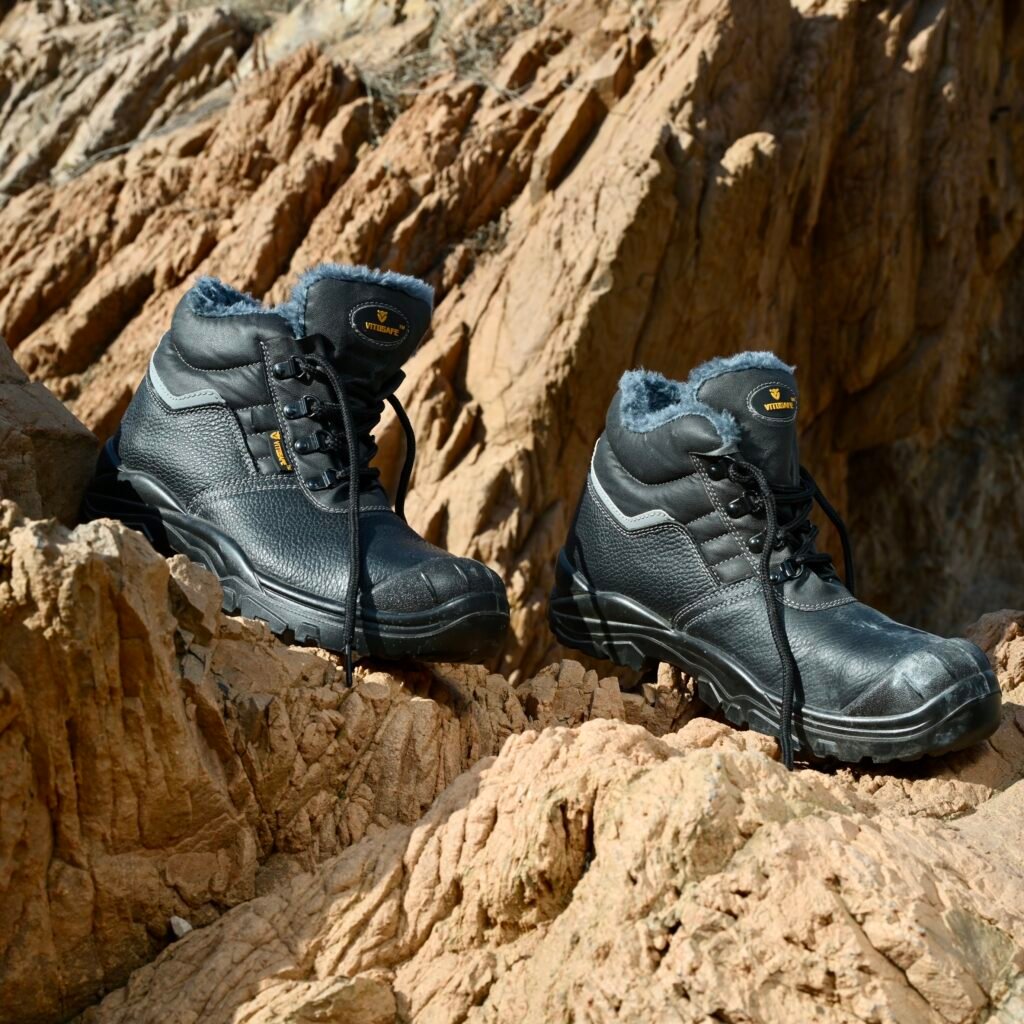
What Is a Steel Toe Cap?
A steel toe cap is a protective reinforcement made from tempered steel, stamped and bonded into the front of the shoe. It is the traditional, longest-proven solution for industrial foot protection.
- Material: Hardened/tempered steel.
- How it is made: Steel is pressed into a cap shape and sealed inside the shoe’s upper during assembly.
- Safety rating: Meets EN ISO 20345 impact resistance of 200 joules and the required compression rating.
- VITOPPE standard: Every VITOPPE steel toe model is SGS/CTC tested and EN ISO 20345 certified, available with puncture-resistant midsoles, slip-resistant outsoles, and waterproof options.
What Is a Composite Toe Cap?
A composite toe cap is a non-metallic protective cap made from advanced materials such as fiberglass, Kevlar (aramid), carbon fiber, or reinforced thermoplastic. It delivers the same certified impact protection as steel at a lighter weight.
- Materials: Fiberglass, Kevlar/aramid, carbon fiber, engineered plastics.
- Weight advantage: Lighter than steel, which reduces leg and foot fatigue over long shifts.
- Safety rating: Also rated to 200 joules under EN ISO 20345 — equal protection, different material.
- Special properties: Non-metallic, non-conductive to heat and cold, and invisible to metal detectors.
Steel Toe vs Composite Toe: Side-by-Side Comparison
| Feature | Steel Toe | Composite Toe |
|---|---|---|
| Cap material | Tempered steel | Fiberglass / Kevlar / carbon fiber / plastic |
| Weight | Heavier | Lighter (less fatigue) |
| Impact protection | 200 J (EN ISO 20345) | 200 J (EN ISO 20345) |
| Metal detector | Triggers alarm | Passes through undetected |
| Electrical hazard | Conducts electricity | Non-conductive (EH-friendly) |
| Temperature | Conducts cold/heat to foot | Does not transfer temperature |
| Durability | Maximum, longest lifespan | Very good, slightly less than steel |
| Cost (bulk) | Lower | Higher |
| Best for | Heavy industry, smelting, mining | Airports, electrical, cold storage, all-day wear |
When to Choose Steel Toe
Pick steel toe safety shoes when the priority is raw durability and value:
- Heavy impact and crush risk — steel plants, smelters, mining, and heavy fabrication where maximum cap lifespan matters.
- Maximum durability — steel resists deformation better over years of hard use.
- Budget-sensitive bulk orders — steel caps are cheaper to produce, lowering per-pair cost for large procurement.
- No daily metal-detector checkpoints — where security screening is not a factor.
When to Choose Composite Toe
Pick composite toe safety shoes when workplace rules or comfort demand a non-metallic cap:
- Airports, customs, and secure facilities — composite caps pass metal detectors without alarms, avoiding daily delays.
- Electrical work — non-conductive caps pair well with electrical-hazard (EH) rated footwear.
- Cold storage and extreme temperatures — composite does not conduct cold, keeping feet warmer in freezers and cooler in heat.
- All-day comfort — the lighter build reduces fatigue for workers on their feet for long shifts.
VITOPPE Recommendations
At VITOPPE (Qingdao Vitosafe), we manufacture both steel toe and composite toe safety shoes in-house and supply distributors, brands, and industrial buyers in 12+ countries through factory-direct pricing and OEM/ODM. All models are SGS/CTC tested and EN ISO 20345 certified, backed by 740+ client partnerships.
- Need maximum durability and the best bulk price? Explore our VITOPPE steel toe safety shoe series.
- Need metal-detector-friendly, lighter, temperature-stable protection? Explore our VITOPPE composite toe (non-metallic) series.
- Both lines are available with puncture-resistant midsoles, slip-resistant outsoles, and waterproof membranes — configurable for your industry.
Frequently Asked Questions
Is a composite toe cap as safe as a steel toe cap?
Yes. Both steel and composite toe caps must meet the same EN ISO 20345 impact standard of 200 joules, so the certified protection level is identical. The choice is about weight, workplace hazards, and comfort — not safety.
Does a composite toe boot set off metal detectors?
No. Composite toe caps are made from non-metallic materials such as fiberglass, Kevlar, and carbon fiber, so they pass through airport, customs, and factory security checkpoints without triggering metal detectors.
Which is lighter, steel toe or composite toe?
Composite toe boots are lighter. The non-metallic cap itself weighs less than steel, and composite models are usually built on lighter overall constructions, which reduces fatigue during long shifts.
Which keeps feet warmer, steel toe or composite toe?
Composite toe caps do not conduct temperature, so they feel warmer in cold storage and cooler in hot environments. Steel conducts heat and cold, so a steel toe can feel cold against the foot in freezers or refrigerated warehouses.
Is steel toe cheaper than composite toe?
Generally yes for bulk orders. Steel toe caps are less expensive to manufacture, so steel toe safety shoes usually cost less per pair — an important factor for large procurement budgets.
Conclusion
Steel toe and composite toe protect equally at 200 joules — so choose by environment, not by fear of lower safety. Reach for steel when durability and budget lead; reach for composite when metal detectors, electrical hazards, temperature, or all-day comfort matter most.
Ready to choose? Browse VITOPPE steel toe and composite toe collections at www.vitoppe.com, or contact our team for a bulk quote tailored to your industry.