
As we stand on the threshold of 2027, the Personal Protective Equipment (PPE) industry is undergoing its most significant transformation in decades. The “old way” of buying—viewing safety gear as a low-cost commodity to be replaced every three months—is being dismantled.
Driven by stricter ESG (Environmental, Social, and Governance) mandates, a younger and more tech-savvy workforce, and the integration of the Internet of Things (IoT), the future of safety equipment is shifting from “passive armor” to “performance systems.”
For procurement teams and safety officers, staying ahead of PPE trends 2027 isn’t just about innovation; it’s about risk mitigation, worker retention, and supply chain resilience. Here are the five tectonic shifts that will redefine protection in the coming year.
1. Trend 1: Comfort Engineering Goes Mainstream
In 2027, “comfort” is no longer a luxury feature; it is a safety hard metric. There is a growing realization that discomfort is the leading cause of PPE non-compliance. If a safety shoe is too heavy or a helmet traps heat, workers will remove it or wear it incorrectly, creating an immediate liability for the company.
Thermal Adaptation and Lightweighting
We are moving toward “active breathability.” By 2027, we expect to see standard procurement specs requiring specific airflow ratings for footwear and head protection.
- The Weight Threshold: For logistics and warehouse roles, the expected weight for a certified shoe is dropping from 600g to under 450g.
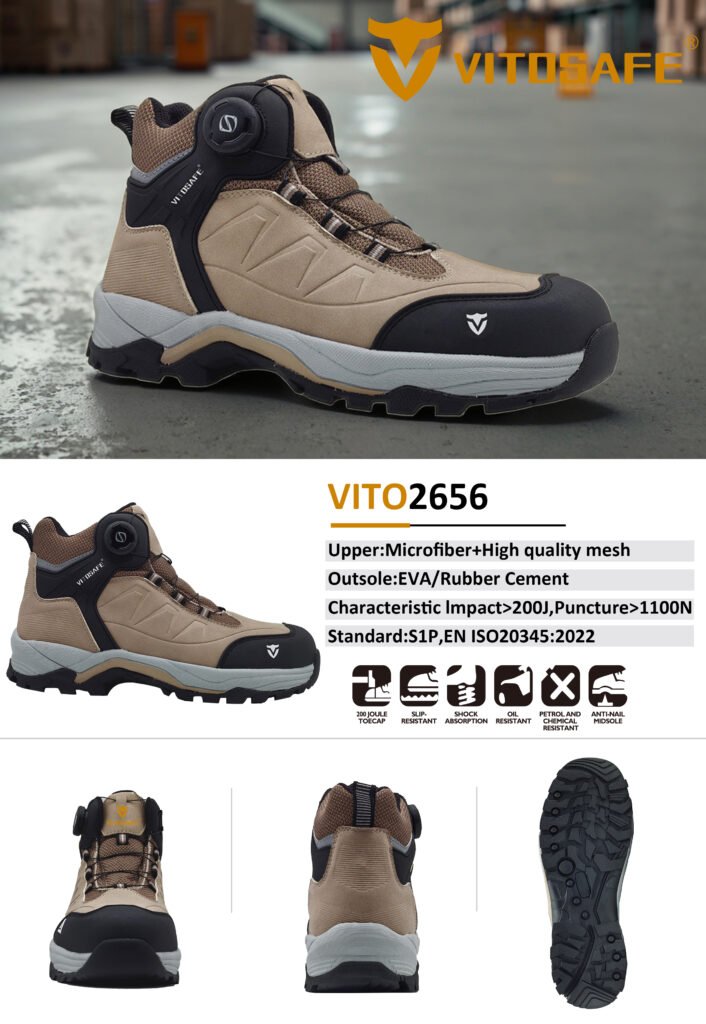
- Advanced Materials: The use of carbon-fiber toe caps and high-rebound EVA midsoles will become the baseline, effectively turning the industrial boot into an athletic tool.
2. Trend 2: Sustainability Enters the Spec Sheet
By 2027, the question isn’t just “Does this shoe protect the foot?” but “What is its carbon footprint?” European and North American buyers are already leading this charge, but global markets are rapidly catching up.
The Rise of the Circular PPE Economy
Sustainability in 2027 will focus on three key areas:
- Recycled Content: Expect to see uppers made from 100% recycled PET plastics and midsoles derived from bio-based foams.
- Carbon Disclosure: Top-tier manufacturers, like VITOPPE, are preparing to provide “Product Environmental Footprint” (PEF) data alongside technical safety reports.
- End-of-Life Planning: Procurement teams will begin choosing suppliers who offer take-back programs or use solvent-free adhesives that make recycling the components easier.
3. Trend 3: Smart PPE Moves From Pilot to Practice
For years, smart PPE was confined to niche pilot programs in mining or oil and gas. In 2027, sensing and connectivity will enter general manufacturing and logistics.
Actionable Workplace Intelligence
The “Smart” gear of 2027 won’t just be high-tech for the sake of it; it will solve specific problems:
- Heat Stress Monitoring: Sensors in safety vests or helmets that alert a supervisor when a worker’s body temperature exceeds a safe threshold.
- Proximity Alerts: Wearables that vibrate when a worker enters a forklift “No-Go” zone.
- Lone-Worker GPS: Integrated into high-visibility clothing for field engineers, ensuring rapid response in the event of a fall or injury.
For the buyer, the challenge in 2027 will be data management—ensuring that the data collected from smart PPE is used to improve safety without infringing on worker privacy.
4. Trend 4: Consolidated Sourcing (The One-Stop Advantage)
The administrative cost of managing a fragmented supply chain has become too high. By 2027, the “Multi-Supplier Strategy” is being replaced by strategic, consolidated partnerships.
Why Buyers are Consolidating
Procurement teams are realizing that buying shoes from Vendor A, helmets from Vendor B, and gloves from Vendor C creates:
- Documentation Chaos: Chasing different CTC/SGS reports from multiple sources.
- Logistical Inefficiency: Higher shipping costs and staggered delivery times.
- Quality Variance: Inconsistent safety cultures across different factories.
The trend for 2027 is the One-Stop PPE Partner. Buyers want a single, certified manufacturer who can guarantee a unified safety standard across all product categories. This reduces the “Mental Load” on procurement and allows for significant logistics ROI.
5. Trend 5: Mental Wellbeing Joins the Safety Brief
Safety gear is increasingly being viewed through the lens of mental health and psychosocial risk. While this sounds abstract, its application in 2027 is very practical: Fatigue Reduction.
Footwear as a Mental Health Tool
Physical fatigue leads to mental errors. A worker who is physically exhausted by poorly designed PPE at hour six of a shift is significantly more likely to make a cognitive error that leads to an accident at hour eight.
- Ergonomic Alignment: PPE in 2027 will focus on skeletal alignment—ensuring that safety boots provide proper arch support to prevent the chronic back pain that drives worker stress and absenteeism.
- Social Comfort: There is a “Psychological Safety” in wearing gear that looks modern and professional. Workers feel more valued and motivated when they aren’t wearing clunky, outdated equipment.
Comparing the Era: 2024 vs. 2027 Expectations
| Procurement Criteria | 2024 Focus (Traditional) | 2027 Focus (Future-Ready) |
|---|---|---|
| Primary Goal | Price per Unit | Total Cost of Ownership (TCO) |
| Material Choice | Standard Leather/Steel | Lightweight/Sustainable/Recycled |
| Certification | Paper-based Lab Reports | Verifiable Digital QR Certificates |
| Comfort | “Good enough” | Hard Metric (Airflow & Weight) |
| Sourcing | Multiple Vendors | Consolidated Manufacturing Partners |
What Buyers Should Do in Q4 2026
To prepare your facility or distribution network for these 2027 shifts, start this checklist today:
- Audit Your Standards: Are you still accepting “self-certified” products? Move all footwear requirements to verifiable CTC or SGS standards.
- Test Lightweight Options: Run a “Wear Trial” with your team using composite toe sneakers to measure the impact on worker energy levels.
- Request Sustainability Data: Ask your current suppliers for their carbon footprint disclosures or their roadmap for using recycled materials.
- Evaluate Consolidation: Look at the hidden costs of managing multiple PPE vendors and explore a One-Stop solution to simplify your 2027 logistics.
Conclusion: The Future belongs to the Prepared
Personal Protective Equipment is no longer just a barrier between a worker and a hazard. In 2027, it is an essential part of the modern industrial infrastructure—impacting everything from carbon accounting to employee retention and real-time data analytics.
By embracing comfort engineering, sustainability, and consolidated sourcing today, you position your organization as a leader in the next era of industrial excellence.
Planning your 2027 safety budgets? Talk to our experts today about our product roadmaps. We are already building the gear that will protect the workforce of 2027.
VITOPPE — Qingdao Vitosafe Footwear Co., Ltd. | Innovating Certified Protection for the Workforce of the Future.