
Quick answer: A steel toe boot is a safety shoe with a tempered steel cap built into the front to protect your toes from falling objects and crushing forces — typically rated to 200 joules under EN ISO 20345. They are the most common, most durable, and usually the most affordable type of certified safety footwear.
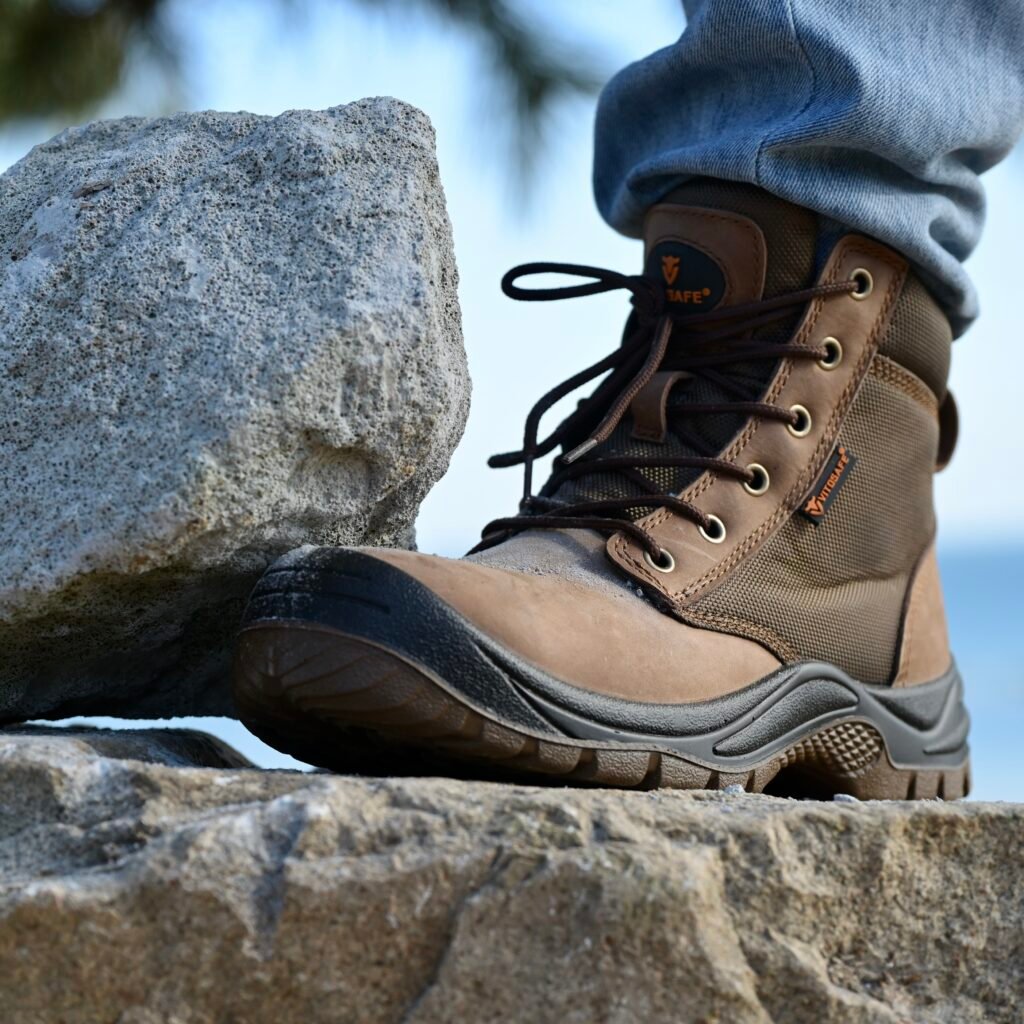
Definition: What a Steel Toe Boot Actually Is
A steel toe boot is work footwear with a hardened steel cap integrated into the toe box during manufacturing. The cap is designed to absorb and distribute impact from dropped tools, materials, and machinery — the classic “something heavy fell on my foot” hazard.
The cap is not simply placed on top of the foot. It is bonded between the upper and lining, so the protection stays in position through a full shift of walking, kneeling, and bending.
The Safety Standard, in Plain Language
A boot claiming toe protection should carry an EN ISO 20345 rating. The code tells you exactly what has been tested:
| Code | What it adds | Typical use |
|---|---|---|
| SB | Basic 200 J toe protection | Light duty, dry indoor work |
| S1 | SB + antistatic, energy absorption, slip resistance | Warehousing, logistics, manufacturing |
| S1P | S1 + puncture-resistant midsole | Sites with nails, scrap, sharp debris |
| S3 | S1P + water-resistant upper and cleated outsole | Construction, outdoor, wet conditions |
For a deeper explanation of every class, see our Footwear Category Classification guide.
Common Features Beyond the Toe Cap
- Slip-resistant outsole — graded for grip on wet or oily surfaces.
- Puncture-resistant midsole — a steel or fabric plate that blocks sharp objects from below.
- Waterproofing — membranes or treated leather for wet environments.
- Energy absorption — cushioning in the heel to reduce strain over long shifts.
- Antistatic properties — dissipates static build-up where required.
Who Needs Steel Toe Boots?
- Construction workers — falling tools, rebar, and heavy materials.
- Warehouse and logistics teams — pallets, cartons, and forklift traffic.
- Manufacturing and fabrication — machinery, metal stock, and scrap.
- Mining, smelting, and heavy industry — the highest-impact environments.
If your team passes through metal detectors daily, steel is the wrong choice — switch to a composite toe boot.
How to Choose the Right Pair
- Match the rating to the hazard. S1 for indoor logistics; S3 for wet, outdoor sites.
- Get the fit right. Leave roughly a thumb’s width in front of the longest toe. Try boots on with the socks you will actually wear.
- Consider the climate. Steel conducts cold and heat — insulation matters in freezers or foundries.
- Check daily-wear comfort. Removable insoles, cushioning, and proper width reduce fatigue.
- Verify certification. Buy from a supplier who can show SGS/CTC test reports.
VITOPPE Steel Toe Range
VITOPPE (Qingdao Vitosafe) manufactures certified steel toe boots factory-direct, with OEM/ODM options for distributors and industrial buyers. All models are SGS/CTC tested and EN ISO 20345 certified, backed by 740+ client partnerships in 12+ countries.
- Explore our steel toe safety shoe collection for S1, S1P, and S3 configurations.
- Need a lighter option? See our alloy toe series.
Frequently Asked Questions
What are steel toe boots?
Steel toe boots are safety footwear with a tempered steel cap built into the front of the shoe. The cap protects the toes from falling objects and compression, typically to an EN ISO 20345 rating of 200 joules.
What do steel toe boots protect against?
They protect against impact from dropped objects, crush injuries, and compression. Depending on the rating (S1, S1P, S3), they can also offer slip resistance, puncture protection, and water resistance.
What is the difference between SB, S1 and S3 steel toe boots?
SB is basic toe protection only. S1 adds antistatic properties, energy absorption and slip resistance. S3 adds puncture resistance and a water-resistant upper with a cleated outsole.
Do steel toe boots set off metal detectors?
Yes. Steel is metal, so steel toe boots will trigger metal detectors. If your team passes through security checkpoints daily, choose a non-metallic composite toe instead.
How should steel toe boots fit?
Leave about a thumb’s width between your longest toe and the cap. The cap should not pinch or rub. Wear the socks you will use on site when trying them on, and check both length and width.
Conclusion
Steel toe boots remain the default for a reason: certified 200-joule protection, proven durability, and the best bulk price. Choose the right EN ISO 20345 class for your hazard, get the fit right, and buy from a certified manufacturer.
Explore certified steel toe boots at www.vitoppe.com