
Quick Answer: The main difference between composite toe vs steel toe comes down to weight, conductivity, and temperature regulation. Steel toe safety shoes are the traditional choice, offering a slimmer profile and lower cost for high-impact environments. Composite safety shoes are significantly lighter, non-metallic (security-friendly), and provide better insulation in extreme temperatures.
At VITOPPE, we understand that a 12-hour shift feels much longer when your feet are heavy or cold. Whether you are looking for footwear for men or women, selecting the right toe cap is the first step toward a productive workday.
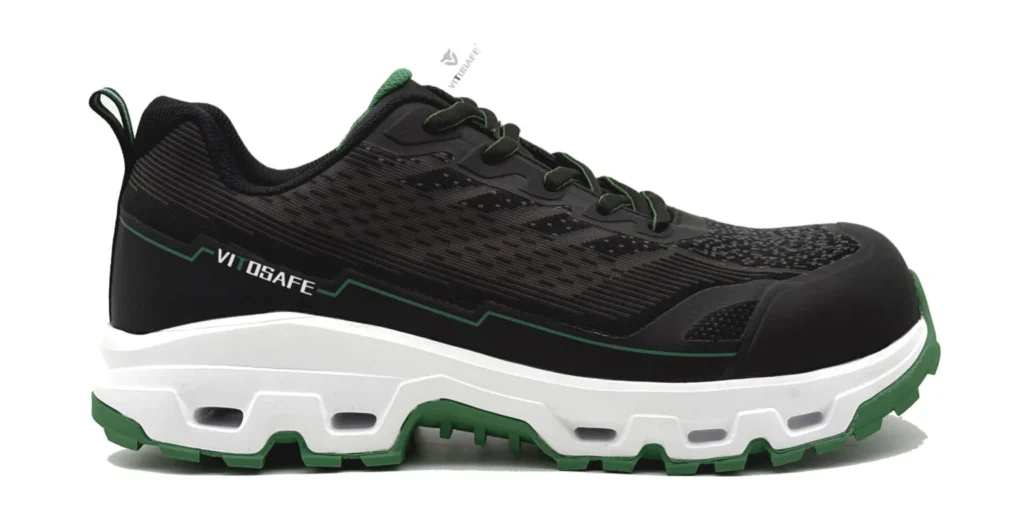
1. How Toe Protection Actually Works (In Plain Language)
Regardless of the material, a safety toe is essentially an “internal armor” cap built into the front of your shoe. Its primary job is to protect your toes from two types of accidents:
- Impact: A heavy object falling onto your foot (e.g., a hammer or a crate).
- Compression: A heavy object rolling over or crushing your foot (e.g., a pallet jack or a vehicle).
While many people think steel is naturally “stronger” because it is metal, modern lightweight safety shoes use high-tech materials like carbon fiber, fiberglass, or heavy-duty plastic (composite) to achieve the same level of protection.
2. Head-to-Head Comparison: Steel vs. Composite
To help you decide, we have broken down the performance of steel toe safety shoes against composite safety shoes across five critical categories.
Comparison Table: Feature by Feature
| Feature | Steel Toe Safety Shoes | Composite Safety Shoes |
|---|---|---|
| Weight | Heavier (can lead to leg fatigue). | Lightweight (approx. 30% lighter). |
| Material | Solid Carbon Steel. | Fiberglass, Carbon Fiber, or Plastic. |
| Metal Detectors | Will set off alarms (Airport/Security). | Non-metallic (Scan-free). |
| Temperature | Conducts heat/cold (feet get cold fast). | Insulating (Keeps feet at stable temp). |
| Profile/Style | Slimmer and more compact. | Slightly bulkier to maintain strength. |
| Electrical Risk | Conductive (Metal). | Non-conductive (Safer for electricians). |
| Price Point | Generally more affordable. | Mid-to-high range due to materials. |
3. Which One Should You Choose for Your Worksite?
Choosing the right tool for the job is essential. Based on our experience supplying global B2B partners, here are our recommendations:
Choose Steel Toe Safety Shoes if:
- You work in Heavy Construction: Where there is a constant risk of extremely sharp objects or heavy machinery impacts.
- You prefer a Sleek Look: Steel caps are thinner, making the shoes look more like everyday sneakers or boots.
- You are on a Budget: For large-scale workforce replenishment, steel toe models offer excellent ROI.
Choose Composite Safety Shoes if:
- You work in Logistics or Warehousing: If you walk 15,000+ steps a day, lightweight safety shoes are non-negotiable to prevent foot fatigue.
- You pass through Security Daily: Perfect for airport workers, nuclear plants, or high-security government buildings.
- You work in Cold Storage: Unlike steel, composite doesn’t transfer the “chill” to your toes, keeping you warm in freezers or winter conditions.
- You are an Electrician: Non-metallic components provide an extra layer of safety against electrical hazards.
4. “Lightweight” Does Not Mean “Unsafe”
A common myth in the PPE industry is that a lighter shoe is a weaker shoe. This is false.
Safety is not measured by weight; it is measured by Testing and Compliance. A lightweight safety shoe with a composite toe is engineered to withstand the same 200 Joules of impact as a heavy steel boot. The difference is in the engineering—modern composite materials are designed to absorb and dissipate energy through advanced structural shapes rather than just raw mass.
When you buy from VITOPPE, you aren’t guessing about safety. Our shoes are verified by CTC and SGS, ensuring they meet the specific impact and compression requirements your job demands.
5. The VITOPPE Advantage: Precision Engineering for Men and Women
At VITOPPE, we don’t believe in a “one size fits all” approach. We offer a diverse range of both steel and composite options tailored for different industries:
- Verified by CTC & SGS: We provide full transparency with testing data. Every batch is checked to ensure that whether it’s a steel cap or a composite one, your toes remain shielded.
- Gender-Specific Ergonomics: Our lightweight safety shoes are available in molds designed specifically for both men and women, ensuring the toe cap sits comfortably without pinching.
- Global Supply Chain: As a trusted manufacturer, we provide OEM/ODM services for brands worldwide, focusing on breathable materials and slip-resistant outsoles to accompany our high-quality toe protection.
Conclusion: Get Your Steel vs. Composite Selection Chart
There is no “winner” in the composite toe vs steel toe debate—only the “right fit” for your specific environment. If your priority is agility and temperature control, go composite. If you need a slim profile and traditional ruggedness at a great price, go steel.
Need help deciding for your team?
Contact VITOPPE Today to request our official “Steel vs. Composite Selection Chart” and a free quotation for your next bulk order. Experience the difference that CTC and SGS-verified footwear makes for your workforce’s safety and comfort.
Composite Toe vs Steel Toe: Choosing Between Lightweight Comfort and Heavy-Duty Protection
Quick Answer: The main difference between composite toe vs steel toe comes down to weight, conductivity, and temperature regulation. Steel toe safety shoes are the traditional choice, offering a slimmer profile and lower cost for high-impact environments. Composite safety shoes are significantly lighter, non-metallic (security-friendly), and provide better insulation in extreme temperatures. Both are equally safe if they meet international standards like EN ISO 20345.
At VITOPPE, we understand that a 12-hour shift feels much longer when your feet are heavy or cold. Whether you are looking for footwear for men or women, selecting the right toe cap is the first step toward a productive workday.
1. How Toe Protection Actually Works (In Plain Language)
Regardless of the material, a safety toe is essentially an “internal armor” cap built into the front of your shoe. Its primary job is to protect your toes from two types of accidents:
- Impact: A heavy object falling onto your foot (e.g., a hammer or a crate).
- Compression: A heavy object rolling over or crushing your foot (e.g., a pallet jack or a vehicle).
While many people think steel is naturally “stronger” because it is metal, modern lightweight safety shoes use high-tech materials like carbon fiber, fiberglass, or heavy-duty plastic (composite) to achieve the same level of protection.
2. Head-to-Head Comparison: Steel vs. Composite
To help you decide, we have broken down the performance of steel toe safety shoes against composite safety shoes across five critical categories.
Comparison Table: Feature by Feature
| Feature | Steel Toe Safety Shoes | Composite Safety Shoes |
|---|---|---|
| Weight | Heavier (can lead to leg fatigue). | Lightweight (approx. 30% lighter). |
| Material | Solid Carbon Steel. | Fiberglass, Carbon Fiber, or Plastic. |
| Metal Detectors | Will set off alarms (Airport/Security). | Non-metallic (Scan-free). |
| Temperature | Conducts heat/cold (feet get cold fast). | Insulating (Keeps feet at stable temp). |
| Profile/Style | Slimmer and more compact. | Slightly bulkier to maintain strength. |
| Electrical Risk | Conductive (Metal). | Non-conductive (Safer for electricians). |
| Price Point | Generally more affordable. | Mid-to-high range due to materials. |
3. Which One Should You Choose for Your Worksite?
Choosing the right tool for the job is essential. Based on our experience supplying global B2B partners, here are our recommendations:
Choose Steel Toe Safety Shoes if:
- You work in Heavy Construction: Where there is a constant risk of extremely sharp objects or heavy machinery impacts.
- You prefer a Sleek Look: Steel caps are thinner, making the shoes look more like everyday sneakers or boots.
- You are on a Budget: For large-scale workforce replenishment, steel toe models offer excellent ROI.
Choose Composite Safety Shoes if:
- You work in Logistics or Warehousing: If you walk 15,000+ steps a day, lightweight safety shoes are non-negotiable to prevent foot fatigue.
- You pass through Security Daily: Perfect for airport workers, nuclear plants, or high-security government buildings.
- You work in Cold Storage: Unlike steel, composite doesn’t transfer the “chill” to your toes, keeping you warm in freezers or winter conditions.
- You are an Electrician: Non-metallic components provide an extra layer of safety against electrical hazards.
4. “Lightweight” Does Not Mean “Unsafe”
A common myth in the PPE industry is that a lighter shoe is a weaker shoe. This is false.
Safety is not measured by weight; it is measured by Testing and Compliance. A lightweight safety shoe with a composite toe is engineered to withstand the same 200 Joules of impact as a heavy steel boot. The difference is in the engineering—modern composite materials are designed to absorb and dissipate energy through advanced structural shapes rather than just raw mass.
When you buy from VITOPPE, you aren’t guessing about safety. Our shoes are verified by CTC and SGS, ensuring they meet the specific impact and compression requirements your job demands.
5. The VITOPPE Advantage: Precision Engineering for Men and Women
At VITOPPE, we don’t believe in a “one size fits all” approach. We offer a diverse range of both steel and composite options tailored for different industries:
- Verified by CTC & SGS: We provide full transparency with testing data. Every batch is checked to ensure that whether it’s a steel cap or a composite one, your toes remain shielded.
- Gender-Specific Ergonomics: Our lightweight safety shoes are available in molds designed specifically for both men and women, ensuring the toe cap sits comfortably without pinching.
- Global Supply Chain: As a trusted manufacturer, we provide OEM/ODM services for brands worldwide, focusing on breathable materials and slip-resistant outsoles to accompany our high-quality toe protection.
Conclusion: Get Your Steel vs. Composite Selection Chart
There is no “winner” in the composite toe vs steel toe debate—only the “right fit” for your specific environment. If your priority is agility and temperature control, go composite. If you need a slim profile and traditional ruggedness at a great price, go steel.
Need help deciding for your team?
Contact VITOPPE Today to request our official “Steel vs. Composite Selection Chart” and a free quotation for your next bulk order. Experience the difference that CTC and SGS-verified footwear makes for your workforce’s safety and comfort.