
A critical safety question every worker and manager should know the answer to
Quick Answer (for immediate decisions)
Yes—in most cases, safety steel toe shoes and safety composite toe shoes should be replaced after absorbing a significant impact, even if they look fine from the outside. The protective toe cap may have internal damage (cracks, deformation, or material fatigue) that is invisible but compromises future protection. This applies to both safety toe shoes men and women’s safety toe work shoes. When in doubt, replace—your feet are not worth the gamble.
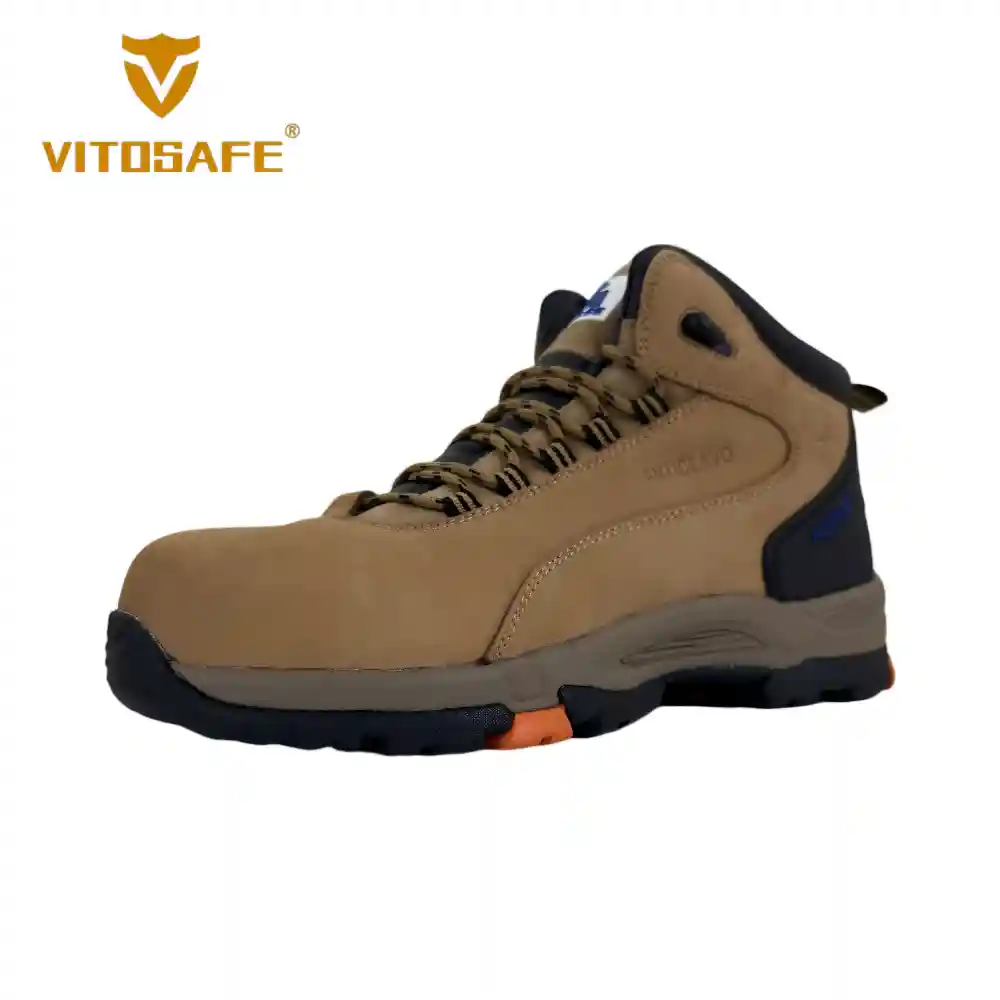
Introduction: The steel toe absorbed the hit—but is it still protecting you?
Picture this: A heavy tool falls and strikes your safety toe work shoe. The impact is hard, but your toes are fine—the toe cap did its job. You inspect the shoe, see no visible damage, and keep wearing it. But here is the critical question most workers never ask: Is that toe cap still strong enough to protect you next time?
The answer is often no. This guide explains what happens inside safety footwear after an impact, how to inspect for hidden damage, when replacement is mandatory, and how employers can simplify this process for their teams.
What happens inside safety shoes after a heavy impact?
When a safety toe work shoe absorbs a significant blow, the protective cap—whether steel or composite—does exactly what it is designed to do: it deforms slightly to absorb energy and prevent that force from reaching your toes. But this deformation can permanently weaken the structure.
For steel toe caps:
- Steel can develop micro-cracks that are invisible to the naked eye
- The metal may bend inward slightly, reducing internal toe clearance
- Repeated smaller impacts cause cumulative metal fatigue
- Once deformed, steel does not “bounce back” to full strength
For composite toe caps:
- Composite materials (fiberglass, Kevlar, carbon fiber) can develop internal fractures
- The material may compress and lose structural integrity
- Unlike steel, composite damage is even harder to detect visually
- Some composite caps are designed for single-impact use only
Damage to the shoe’s internal structure:
Beyond the toe cap itself, the impact can also damage:
- Internal padding and liner materials (crushing, tearing)
- Midsole cushioning (compression that reduces shock absorption)
- Upper-to-sole bonding (separation that weakens overall structure)
Why “looks fine” does not mean “is safe”
The most dangerous assumption is that external appearance equals internal integrity. Many workers (and even some supervisors) believe that if the shoe upper is not torn and the toe cap is not visibly bent, the shoe is still safe. This is false.
Hidden damage is common:
- A steel cap can have internal cracks with no external signs
- A composite safety shoe can have fractured layers beneath the surface
- The liner and padding can be crushed flat, reducing toe clearance
- Bonding adhesives can fail, creating weak points
Standard safety testing involves single-use impact tests—meaning the toe cap is tested once, and if it passes, the shoe is certified. But in real-world use, that same toe cap may have already absorbed the one impact it was certified to withstand.
The risk of “second impact failure”:
If a weakened toe cap is struck again, it may fail catastrophically—collapsing onto your toes with full force. This is why safety standards and workplace policies often require immediate replacement after any significant impact.
Post-impact inspection checklist (5 critical checks)
If your safety toe shoes men or womens safety toe shoes have been struck by a falling object, perform these checks before wearing them again:
1) Check for visible deformation of the toe cap
- Look from the side and top—is the cap bent, dented, or misshapen?
- Press gently on the cap—does it flex more than before?
2) Check internal toe clearance
- Put the shoe on and press your toes forward—is there less room than before?
- Does the cap now press against your toes when standing?
3) Inspect the upper material around the impact zone
- Are there tears, punctures, or separation from the sole?
- Is the stitching intact?
4) Check the midsole and outsole
- Is the midsole compressed or cracked?
- Is the outsole separating from the upper?
5) Listen and feel for loose parts
- Shake the shoe—do you hear rattling or feel loose material inside?
- Does the toe cap feel loose or detached?
If any of these checks reveal damage, the shoe must be replaced immediately.
When you must replace immediately (no discussion, no exceptions)
Some impact scenarios require automatic replacement, regardless of inspection results:
| Situation | Action required | Why |
|---|---|---|
| Toe cap is visibly bent or cracked | Replace immediately | Structural failure is already present |
| Impact was from a sharp or crushing load | Replace immediately | Internal damage is highly likely even if invisible |
| You feel the cap pressing against your toes | Replace immediately | Clearance loss = next impact reaches your foot |
| The shoe failed any of the 5 inspection checks | Replace immediately | Hidden damage compromises protection |
| Impact was severe (dropped from height, heavy weight) | Replace immediately | Single-impact certification may be exhausted |
Special note for composite toe shoes:
Many safety composite toe shoes are designed for single significant impact use. If you are unsure whether your composite-toe model can withstand multiple impacts, treat any major strike as a replacement trigger. When safety is at stake, it is better to replace unnecessarily than to risk permanent injury.
Employer responsibilities: inspection, documentation, and replacement
In many regions, workplace safety regulations require employers to:
- Provide workers with appropriate PPE, including safety toe work shoe options
- Replace damaged PPE promptly at no cost to the worker
- Document impact incidents and footwear replacement
- Train workers on when and how to report damaged footwear
Creating a simple workplace policy:
A clear, enforceable policy reduces confusion and liability. Example language:
“Any worker whose safety footwear is struck by a falling object, heavy equipment, or vehicle must immediately report the incident to their supervisor. The footwear will be inspected using the company checklist. If damage is found—or if the impact was severe—the footwear will be replaced within [X] business days at no cost to the worker. Workers may not continue wearing damaged safety footwear.”
This policy protects both workers and employers from liability and injury.
Steel toe vs composite toe: Does impact response differ?
Both safety steel toe shoes and composite safety shoe options are designed to protect—but they respond differently to impacts.
| Factor | Safety steel toe shoes | Safety composite toe shoes |
|---|---|---|
| Material behavior | Deforms (bends) under impact | Compresses or fractures under impact |
| Visibility of damage | Sometimes visible (dents, bends) | Often invisible (internal fractures) |
| Multiple-impact tolerance | Low (metal fatigue accumulates) | Very low (often single-use by design) |
| Weight | Heavier | Lighter (light safety shoes) |
| Inspection difficulty | Easier (bends are visible) | Harder (damage is internal) |
| Best replacement policy | Replace after any visible deformation | Replace after any significant impact |
Takeaway: Regardless of material, both types should be replaced after absorbing a major impact. If you prioritize lighter footwear for comfort and mobility, light safety shoes with composite toes are excellent—but understand their single-impact limitation and replace accordingly.
Vitoppe: Fast replacement supply and bulk purchasing support
For safety managers, procurement teams, and distributors, keeping workers in safe, compliant footwear requires reliable supply and fast turnaround. Vitoppe supports businesses with:
Factory-direct supply and fast restocking:
- Short lead times for standard models
- Stock availability planning to support your replacement cycles
- Emergency restocking support for accident-related replacements
OEM/ODM customization for fleet uniformity:
- Match your company colors, logos, and branding
- Customize sizing, width, and comfort features
- Create SKU codes for easier internal tracking
Full range for mixed teams:
- Safety toe shoes men in full sizing
- Women’s safety toe work shoes and womens safety toe shoes with true women’s fit (not just small men’s sizes)
- Most comfortable safety shoes options with EVA cushioning, memory foam insoles, and breathable uppers
Documentation support:
- CTC and SGS test reports available (by model and test scope)
- Support for your internal compliance and audit needs
Specialty options:
- Safety toe skate shoes for non-traditional industries (e.g., tech, creative, retail with safety requirements)
- Lightweight models for roles with high mobility demands
Practical guide: How to simplify footwear replacement in your facility
Step 1: Create a clear reporting process
Workers must know how and to whom to report damaged footwear.
Step 2: Train supervisors on the 5-point inspection checklist
Give them a simple, printable checklist they can use on the spot.
Step 3: Stock common sizes on-site or establish a fast-ship agreement
Waiting weeks for replacement footwear is not acceptable—workers should not be pressured to wear unsafe shoes while waiting.
Step 4: Track replacement frequency
If certain roles or areas have high replacement rates, investigate whether stronger protection (e.g., metatarsal guards, higher-rated toe caps) is needed.
FAQ (quick answers for common questions)
Q: Can I keep wearing my safety shoes if the impact was minor?
A: Perform the 5-point inspection. If all checks pass and the impact was truly minor (no visible change, no loss of clearance), cautious continued use may be acceptable—but document the incident and monitor the shoe closely.
Q: How can I tell if my composite toe cap is damaged?
A: You often cannot. This is why composite safety shoe models should be replaced after any significant impact, even if they look perfect.
Q: Does the replacement policy differ for steel vs composite toes?
A: Functionally, both should be replaced after major impacts. Composite toes are often more sensitive to hidden damage, so err on the side of caution.
Q: Are lightweight safety shoes less durable after impact?
A: Not necessarily. Light safety shoes with composite toes can offer the same protection level as steel, but their impact-tolerance behavior is different. Always check test certifications (CTC, SGS, etc.) and follow replacement guidelines.
Q: Does Vitoppe offer the most comfortable safety shoes for all-day wear?
A: Yes. Our comfort-focused range includes most comfortable safety shoes options with EVA midsoles, memory foam insoles, and breathable uppers—available for both men and women.
Final thought: Replacing safety shoes after impact is not wasteful—it is smart risk management
The cost of one replacement pair of safety toe work shoe is negligible compared to the cost of a workplace injury: medical bills, lost productivity, workers’ compensation claims, and regulatory penalties. When a shoe has done its job by protecting a worker from injury, honor that by replacing it—do not ask it to perform miracles twice.
Ready to establish a safer, faster footwear replacement process?
Contact Vitoppe’s enterprise purchasing team for bulk supply, custom SKU planning, fast restocking agreements, and CTC/SGS documentation support. We will help you keep your team protected without supply-chain delays.
Protect your workers. Replace damaged footwear.