
A safety shoe that looks fine on the outside may offer zero protection on the inside.
The tread is worn flat. The midsole has collapsed. The toe cap has shifted. But the upper still looks presentable — so the worker keeps wearing it.
This is one of the most common — and dangerous — mistakes in workplace safety.
Even the most comfortable safety shoes lose their protective properties over time. And safety steel toe shoes that have passed their lifespan can fail at the exact moment you need them most. This guide tells you exactly how long safety shoes should last, what signs to watch for, and when it’s time to replace them.
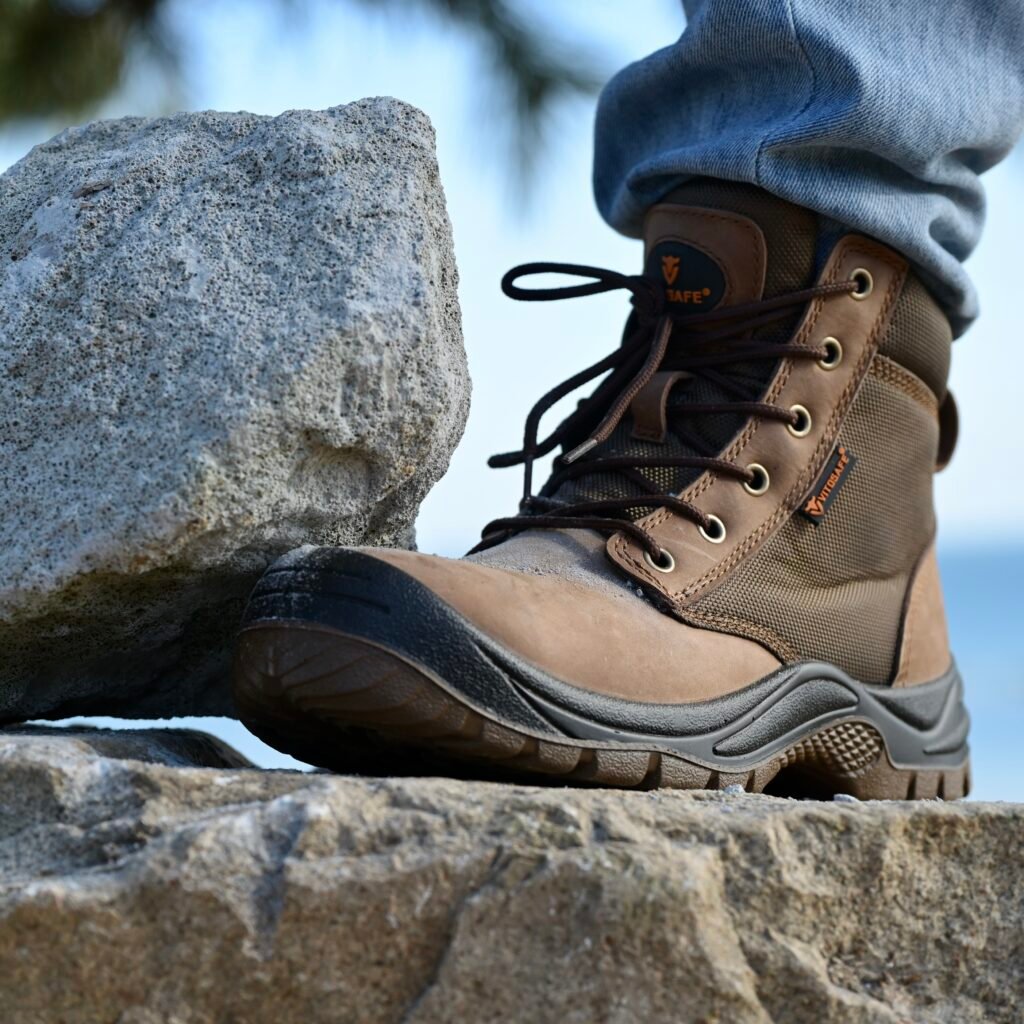
How Long Do Safety Shoes Last? A Lifespan Guide by Industry
There is no single answer. Lifespan depends on your industry, your environment, and how hard you work your shoes.
Here is a general guide:
| Industry / Work Environment | Expected Lifespan |
|---|---|
| Office / Light indoor work | 18 – 24 months |
| Retail / Hospitality / Healthcare | 12 – 18 months |
| Warehousing / Logistics | 10 – 14 months |
| Light manufacturing | 8 – 12 months |
| Construction / Civil engineering | 6 – 10 months |
| Mining / Heavy industry / Oil & gas | 4 – 8 months |
| Chemical or acid exposure environments | 3 – 6 months |
These are estimates — not guarantees.
A worker in heavy construction who walks on rough terrain every day may wear through a pair in 4 months. A warehouse supervisor who walks on smooth floors wears them less aggressively.
The key rule: inspect regularly, not on a schedule. Replace when the shoe shows damage — not when a date arrives.
5 Signs It’s Time to Replace Your Safety Shoes
These are the five signals that tell you your shoes are no longer safe to wear.
Signal 1: Outsole Tread Has Worn Flat
Run your finger across the bottom of the sole.
If the tread pattern has worn down and the surface feels smooth — grip is gone. A flat sole on a wet or oily floor is as dangerous as wearing no safety shoe at all.
If tread depth has dropped below 2mm, replace immediately.
Signal 2: Slip Resistance Pattern Has Disappeared
Look at the tread channels between the tread blocks.
If the channels are shallow, clogged, or no longer clearly defined — the drainage system has failed. The shoe cannot move liquid away from the contact surface. Slip risk is now significantly elevated.
Signal 3: The Toe Cap Has Shifted, Cracked, or Deformed
In steel toe shoes, press down on the toe cap area from the outside.
If the cap moves, feels loose, or has visibly shifted position — it can no longer absorb impact correctly. A deformed or displaced toe cap is not protecting your toes.
In safety shoes composite toe styles, check for cracks or soft spots in the toe box. Composite materials can fracture under repeated stress without visible external damage.
Signal 4: The Upper Is Cracking, Splitting, or Peeling
Leather and synthetic uppers protect your feet from debris, water, and chemicals.
Visible cracks, splits along the stitching, or peeling material means the upper has lost structural integrity. Water, chemicals, and sharp objects can now penetrate the shoe.
This is especially critical in chemical or wet environments.
Signal 5: The Insole and Midsole Have Collapsed
Stand in the shoes on a flat surface.
Does the arch support feel flat? Does the heel feel like you’re standing on hard board? Has the cushioning completely compressed?
A collapsed midsole means every step creates impact that travels directly into your joints. Foot fatigue, knee pain, and back problems follow quickly.
This is also when previously comfortable steel toe safety shoes start causing pain — the comfort is gone because the structure is gone.
Factors That Shorten Safety Shoe Lifespan
Some work conditions destroy safety shoes faster than others.
Chemical exposure: Acids, solvents, and cleaning chemicals attack outsole rubber and upper materials. A shoe rated for standard industrial use may fail in 3 months in a high-chemical environment.
Extreme heat: Heat hardens rubber outsoles and degrades adhesive bonds between layers. Working near furnaces, kilns, or hot surfaces accelerates sole separation and rubber cracking.
Heavy daily mileage: Workers who walk 15,000+ steps per shift wear through soles at twice the rate of desk-based roles. Tread depth drops faster. Cushioning collapses sooner.
Improper storage: Leaving safety shoes in direct sunlight, near heat sources, or in damp conditions between shifts degrades materials rapidly. UV exposure yellows and cracks synthetic uppers. Moisture breeds bacteria and breaks down adhesives.
Wearing the wrong shoe for the environment: A lightweight office-grade safety shoe worn on a construction site wears out in weeks, not months. Matching shoe construction to environment is essential for maintaining both safety and lifespan.
How to Extend the Life of Your Safety Shoes
Proper maintenance adds months to your safety shoe lifespan.
Clean after every shift. Remove dirt, grease, and debris from the outsole and upper after each day. Use a brush on the tread channels. Use mild soap on leather or synthetic uppers. Never use harsh solvents — they damage materials.
Apply waterproofing treatment regularly. For leather uppers, apply waterproofing wax or spray every 2–4 weeks. This prevents water absorption that causes leather to crack and deteriorate.
Rotate between two pairs. Two pairs worn alternately last longer than one pair worn daily. Each pair gets time to dry fully between shifts — preventing moisture-related breakdown.
Store correctly. Keep safety shoes in a cool, dry, ventilated space away from direct sunlight. Use a shoe tree or stuff with newspaper to maintain shape.
Replace insoles before the shoe. If the insole is worn but the shoe is otherwise intact, replacing the insole extends comfort and protection. Safety toe inserts for shoes can also be added to extend the functional life of a shoe with a worn insole but solid structure.
The Real Risk of Wearing Damaged Safety Shoes
Some workers push past the warning signs to avoid the cost of replacement.
This is the wrong calculation.
A damaged safety shoe creates real dangers:
- No slip resistance on wet or oily floors
- No toe cap protection if the cap has shifted or cracked
- No puncture resistance if the midsole has degraded
- No ankle stability if the upper has split or the midsole has collapsed
- Joint and back pain from a collapsed cushioning system
One workplace injury costs far more than any pair of safety shoes.
The logic is simple: when your shoes are damaged, replace them.
Vitoppe Durable Safety Shoe Collection
Vitoppe builds safety shoes designed to last through demanding work environments.
For men in heavy-duty roles: Our best safety shoes for men in construction, mining, and manufacturing are built with thick outsoles, reinforced uppers, and durable steel toe caps. Mens safety toe shoes in our heavy-duty range are designed for maximum lifespan under extreme conditions. Mens composite safety shoes provide equivalent protection with lighter materials for workers who need durability without added weight.
👉 [Shop Men’s Durable Safety Shoes →]
For women in demanding environments: Women safety shoes in our durable collection are built on female-specific lasts with the same high-grade materials used in our men’s range. Composite safety shoes for ladies combine long-lasting composite toe protection with anatomical fit for all-day comfort.
👉 [Shop Women’s Safety Shoes →]
For workers prioritizing comfort and longevity: Our ultra lightweight safety shoes are engineered for durability without bulk. Safety toed shoes in our comfort range use reinforced construction to maintain shape and support across months of daily use. All types of safety shoes in our range are designed to outlast cheaper alternatives — reducing total replacement cost over time.
👉 [Shop Lightweight & Comfort Safety Shoes →]
All Vitoppe safety shoes are CTC and SGS certified. Every pair is tested before it leaves our facility.
Vitoppe also works with safety shoes distributors globally for bulk supply and business accounts.
👉 [Contact Us for Distributor and Bulk Orders →]
Conclusion
A safety shoe does not announce when it stops protecting you.
It just fails — silently — until something goes wrong.
Here is your replacement checklist:
- Tread worn flat → Replace now
- Slip resistance channels gone → Replace now
- Toe cap shifted or cracked → Replace now
- Upper splitting or cracking → Replace now
- Midsole collapsed → Replace now
Do not wait for a scheduled date. Inspect monthly. Replace on damage.
The best investment in workplace safety is a fresh pair of certified shoes — before an accident makes the decision for you.
Ready to Upgrade Your Safety Shoes?
Browse Vitoppe’s full collection of durable, certified safety footwear for men and women. Steel toe, composite toe, lightweight, heavy-duty — all CTC and SGS certified.
Not sure which style suits your job and environment? Contact our team. We’ll help you find the right pair.