
Quick Answer: The secret to high-performance oil grip work gloves is the combination of an advanced palm coating and an ergonomic fit, rather than just thickness. For oily environments, nitrile coated gloves are the industry gold standard due to their superior chemical resistance and textured grip, while PU and latex coatings serve different roles in dry or wet precision tasks.
In any industrial environment, your hands are your most valuable tools. However, when those tools become covered in oil, grease, or water, the risk of accidents skyrockets. Dropped equipment, skin irritation, and severe blisters are common issues when wearing the wrong gloves at work.
At VITOPPE, we specialize in manufacturing high-performance working gloves verified by CTC and SGS. We understand that choosing the best work gloves isn’t just about protection—it’s about maintaining productivity in challenging conditions.
The Common Risks of Using Inferior Work Gloves
Whether you are looking for work gloves for men or specialized industrial gear, ignoring the specific environmental hazards can lead to:
- Oil-Induced Slips: Standard fabric or low-quality rubber becomes incredibly slippery when exposed to lubricants, leading to dropped tools and crush injuries.
- Rapid Abrasion: Rough surfaces can tear through weak materials in hours, leaving hands exposed.
- Dermal Irritation & Blisters: Poorly fitted work gloves cause internal friction, while non-breathable materials lead to “swamp hand,” causing skin to soften and tear easily.
- Heat Loss: In colder months, using standard gear instead of specialized winter work gloves leads to reduced dexterity and increased injury risk.
Coating Material Comparison: Finding the Right Grip
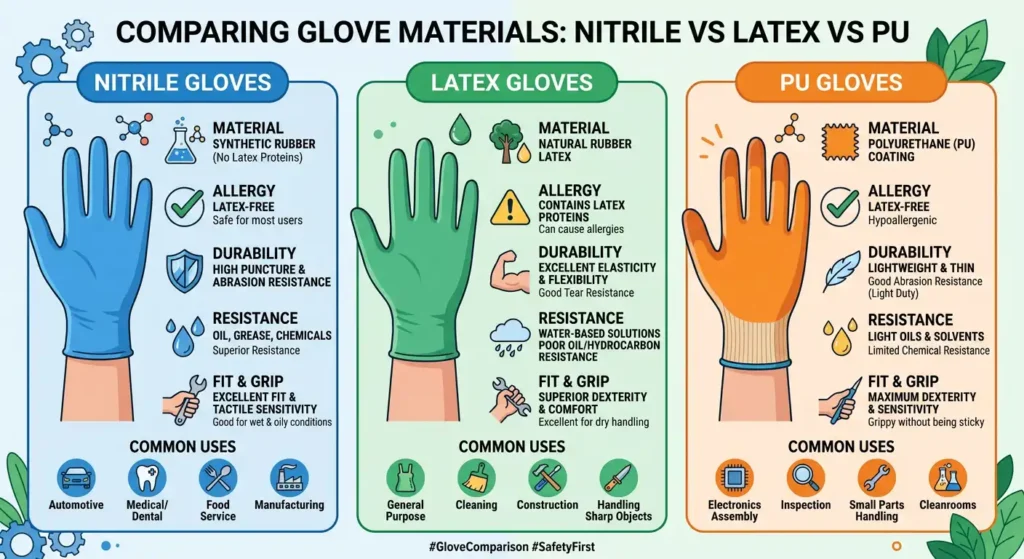
The technology behind anti-slip work gloves lies in the coating. Different materials react differently to oil, water, and friction. Use the table below to identify the best material for your specific needs.
| Coating Type | Oil Resistance | Abrasion Resistance | Flexibility | Best Use Case |
|---|---|---|---|---|
| Nitrile (NBR) | Excellent | High | Moderate | Auto repair, oily machining, fuel handling. |
| Polyurethane (PU) | Fair | Moderate | Excellent | Electronics, precision assembly, cleanrooms. |
| Latex (Rubber) | Poor | Moderate | High | Construction, glass handling, wet (non-oily) work. |
| Sandy Nitrile | Elite | Very High | Moderate | Heavy oil environments, durable work gloves needs. |
Scene Selection: Matching Gloves to the Task
Not all warehouse grip gloves are built the same. A worker picking light boxes in a dry warehouse has different needs than a mechanic dealing with engine fluids or a laborer needing gloves for winter work.
| Industry Scenario | Recommended Glove Feature | Why? |
|---|---|---|
| Warehouse & Picking | PU Coated / Light Nitrile | Needs high dexterity and “tackiness” for cardboard. |
| Mechanical & Auto | Sandy Nitrile Coated | Maximum grip on lubricated metal parts. |
| Logistics (Cold Chain) | Insulated Winter Work Gloves | Maintains warmth while providing a secure grip. |
| Heavy Construction | Reinforced Nitrile / Leather | Requires durable work gloves to withstand rough stone/metal. |
Why Fit and Size Matter More Than You Think
Even the best work gloves will fail if they don’t fit correctly.
- Too Loose: A loose glove creates a “gap” between your skin and the material. This causes the glove to move independently of your hand, leading to friction blisters and a significant loss of tactile sensitivity.
- Too Tight: Gloves that are too small restrict blood flow. In cold conditions, this makes gloves for winter work ineffective, as your hands will become numb despite the insulation.
VITOPPE Tip: When trying on working gloves, you should be able to make a full fist without feeling excessive tension across the knuckles, and there should be no “extra” material at the fingertips.
Maintenance: How to Extend the Life of Your Durable Work Gloves
To ensure your gloves at work remain effective, proper care is essential. Proper maintenance prevents the coating from cracking or losing its anti-slip properties.
- Cleaning: For nitrile coated gloves, wipe away excess oil after use with a dry cloth. Most synthetic work gloves for men can be machine washed on a cold, gentle cycle with mild detergent.
- Drying: Never put safety gloves in a high-heat dryer. Heat breaks down the molecular bonds in NBR and PU coatings. Always air-dry them away from direct sunlight.
- Storage: Store your winter work gloves and standard gear in a cool, dry place. Prolonged UV exposure can make the coatings brittle.
Why VITOPPE is Your Trusted PPE Partner
At VITOPPE, we are more than just a trading company; we are a dedicated manufacturer focused on R&D and quality control.
- Certified Quality: Every pair of our anti-slip work gloves undergoes rigorous testing. We maintain CTC and SGS certifications to ensure our products meet EN388 and ANSI standards.
- Customization: We provide professional OEM/ODM services. Whether you need specific colors, branded logos, or custom packaging for your warehouse grip gloves, our factory can accommodate bulk orders with precision.
- Advanced Materials: We utilize the latest fiber and coating technologies to produce lightweight safety shoes and gloves that balance protection with extreme comfort.
Conclusion: Get Your Oily Condition Work Glove Checklist
Choosing the right oil grip work gloves is a commitment to safety and efficiency. By matching the coating to the environment and ensuring a professional fit, you reduce the risk of injury and lower the long-term cost of PPE replacement.
Ready to upgrade your team’s safety gear?
request a Free Sample for your facility.