
Proper maintenance can double the lifespan of your safety shoes.
That’s not an exaggeration. A well-maintained pair lasts twice as long as a neglected one — and maintains its full protective performance throughout.
Work wear safety shoes face harsh daily conditions. Dirt, grease, moisture, and chemicals attack the materials from every angle. Without regular care, the outsole degrades, the upper cracks, and the internal cushioning collapses — long before the shoe looks visibly worn out.
This guide covers everything you need to know to keep your safety footwear clean, functional, and safe — shift after shift.
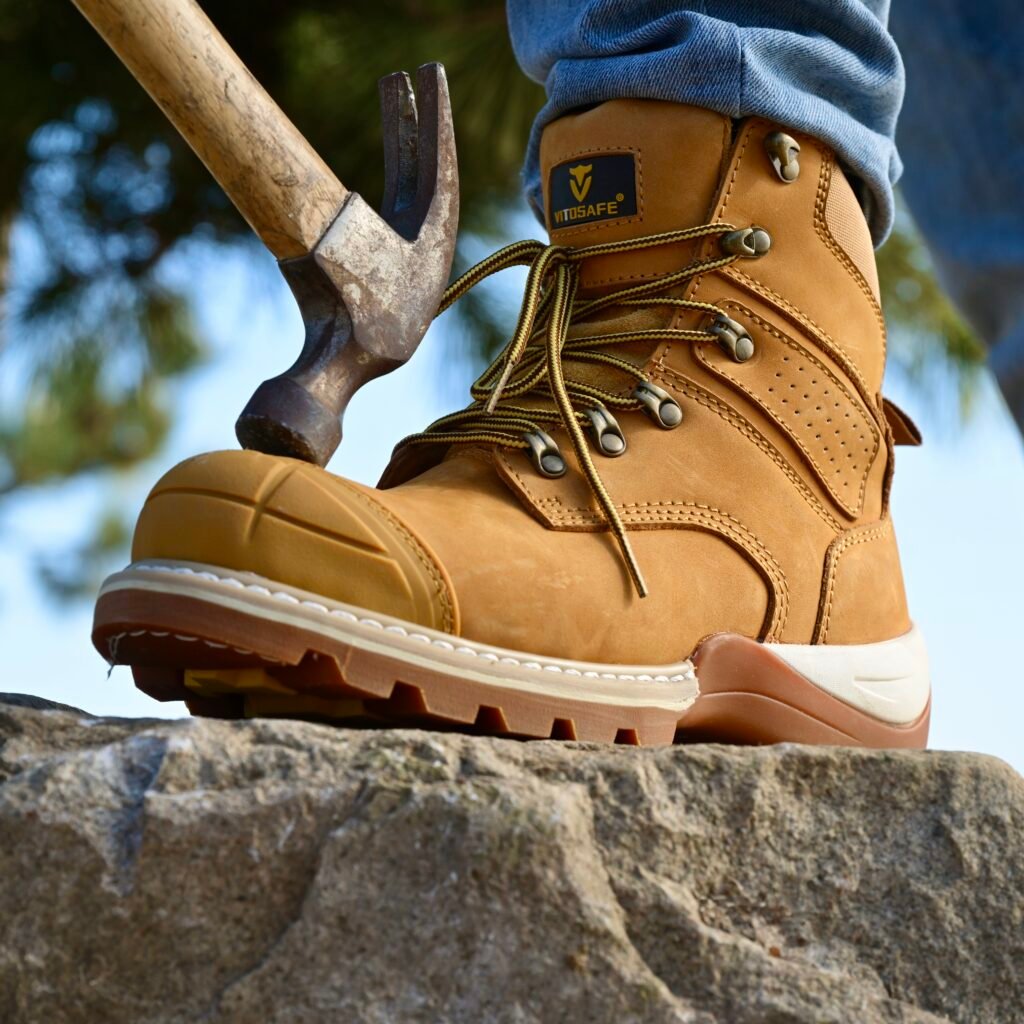
Why Cleaning Directly Affects Protection Performance
Most workers think cleaning is about appearance.
It’s not. It’s about safety.
Here’s why:
Slip resistance degrades without cleaning. Grease, food particles, and debris clog the tread channels of your outsole. Clogged channels cannot drain liquid away from the contact surface. The result: a shoe that looks fine but grips like a flat sole on wet floors.
Waterproofing breaks down without treatment. Dirt and grime embedded in leather or synthetic uppers damage the surface coating. Once the coating breaks down, water penetrates — and wet feet are a health and safety risk.
Breathability is blocked by buildup. Mesh and fabric uppers on lightweight safety toe shoe styles rely on open pores for airflow. Dirt and sweat residue block those pores. Blocked airflow means hotter, damper feet — and faster material breakdown from moisture inside the shoe.
Clean shoes protect better. Every time.
Cleaning Methods by Material Type
Different upper materials require different cleaning approaches.
Leather Uppers — Men’s and Women’s Safety Toe Shoes
Leather is durable but requires conditioning to stay flexible.
What to use: Soft brush, damp cloth, leather cleaner or mild soap, leather conditioner
How to clean:
- Remove loose dirt with a dry brush
- Wipe the surface with a damp cloth
- Apply a small amount of leather cleaner with a soft cloth
- Wipe clean and allow to air dry fully
- Once dry, apply leather conditioner to restore flexibility
- Finish with a waterproofing wax or spray
Frequency: After every 2–3 shifts, or immediately after heavy mud or water exposure
Do not: Submerge in water, apply heat, or use alcohol-based cleaners on leather
This applies to men’s safety toe shoes in leather boot styles and steel toe women’s safety shoes with leather uppers.
Synthetic and Fabric Uppers — Athletic and Lightweight Styles
Synthetic materials are lower maintenance but still need regular attention.
What to use: Soft brush, mild soapy water, clean cloth
How to clean:
- Brush off dry debris
- Mix mild detergent with warm water
- Scrub the upper gently with a soft brush
- Wipe clean with a damp cloth
- Air dry at room temperature — away from direct heat
Frequency: After every 3–5 shifts, or when visibly soiled
This applies to composite toe safety shoes in athletic styles and lightweight safety toe shoe designs for warehouse and logistics roles.
Mesh Uppers — Breathable Athletic Safety Shoes
Mesh requires the gentlest approach.
What to use: Soft toothbrush, cold water, mild soap
How to clean:
- Brush off surface dust gently
- Dab soapy water onto the mesh with a soft brush — do not scrub aggressively
- Rinse with a clean damp cloth
- Stuff with newspaper and air dry slowly
Do not: Wring, squeeze, or put mesh uppers in a tumble dryer
PVC and Rubber Uppers — Rain Boots and Waterproof Styles
PVC is the easiest material to clean.
What to use: Damp cloth or sponge, mild soap, water hose if available
How to clean:
- Rinse off mud and debris under running water
- Wipe down with a soapy cloth
- Rinse clean and air dry
Frequency: After every shift in wet or muddy environments
Always clean the outsole tread channels thoroughly — not just the upper surface.
How to Clean and Replace Insoles
Insoles absorb sweat every shift.
Without regular cleaning, they become a source of odor, bacteria, and fungal growth.
Cleaning insoles:
- Remove the insole from the shoe
- Hand wash with mild soap and warm water
- Rinse thoroughly
- Allow to air dry completely before placing back in the shoe — never dry with heat
Deodorizing insoles: Sprinkle baking soda on the insole surface. Leave overnight. Shake off before replacing.
When to replace insoles: Replace insoles every 3–6 months depending on use intensity. A flat, compressed insole provides no cushioning — and no arch support. Replacing insoles before the shoe extends comfort and delays the need for full shoe replacement.
This matters especially for safety shoes for women and women’s safety toe shoes where arch support is critical for long-shift comfort.
How to Store Safety Shoes Correctly
Storage has a bigger impact on shoe lifespan than most workers realize.
Keep them away from direct sunlight. UV exposure yellows synthetic materials, dries out leather, and hardens rubber outsoles. Store in a shaded, ventilated area.
Keep them dry. Moisture trapped inside a stored shoe breeds bacteria and breaks down adhesive bonds between sole layers. Always allow shoes to dry fully before storing.
Use a shoe tree or stuff with newspaper. Safety shoes — especially leather safety shoes safety boots styles — lose their shape when stored empty. A shoe tree or newspaper stuffing maintains the toe box shape and prevents creasing.
Do not stack heavy items on top of stored shoes. Weight deforms the upper and compresses the midsole.
Rotate between pairs. If you wear men’s work shoes safety toe or safety shoes for men daily, owning two pairs and alternating shifts is the single most effective way to extend lifespan. Each pair gets a full recovery period between uses.
Common Maintenance Mistakes to Avoid
These mistakes shorten safety shoe lifespan significantly.
❌ Putting safety shoes in the washing machine Machine washing damages adhesive bonds, warps toe caps, and destroys leather conditioning. Hand wash only — always.
❌ Drying with a tumble dryer, radiator, or heat gun Heat hardens rubber, cracks leather, and melts adhesives. Always air dry at room temperature.
❌ Using strong solvents or bleach Solvents dissolve waterproof coatings and degrade rubber outsoles. Bleach weakens fabric and synthetic uppers. Use only mild soap or specialist shoe cleaning products.
❌ Ignoring the outsole Most workers clean the upper and forget the sole. The tread channels are where safety performance lives. Clean the outsole — especially the tread — at every cleaning session.
❌ Storing wet shoes immediately after a shift Wet shoes stored in a bag or locker without drying develop mold and breakdown rapidly. Always air dry before storage.
Recommended Maintenance Schedule by Shift Intensity
| Work Environment | Clean Outsole | Clean Upper | Condition Leather | Replace Insole |
|---|---|---|---|---|
| Office / Light indoor | Weekly | Every 2 weeks | Monthly | Every 6 months |
| Warehouse / Logistics | After every shift | Every 3–5 shifts | Every 2 weeks | Every 4–5 months |
| Construction / Outdoor | After every shift | After every shift | Weekly | Every 3 months |
| Food processing / Wet environments | After every shift | After every shift | N/A (non-leather) | Every 3 months |
| Chemical environments | After every shift | After every shift | Weekly | Every 2–3 months |
Use this as a baseline. Increase frequency if your environment is particularly harsh.
Vitoppe Safety Shoes — Built to Last, Easy to Maintain
Vitoppe designs safety toe shoes with maintenance in mind.
Our materials are chosen for durability and ease of care — so your shoes perform at full protection level for as long as possible.
For men: Safety shoes for men in our range — including men’s safety toe shoes and men’s work shoes safety toe — are available in leather, synthetic, and athletic materials with clear care instructions for each style.
For women: Safety shoes for women and steel toe women’s safety shoes in our collection are built on female-specific lasts with materials that balance durability and everyday comfort. Women’s safety toe shoes styles in lightweight and heavy-duty formats are all designed for long working life with proper care.
👉 [Shop Women’s Safety Shoes →]
Full range: From composite toe safety shoes in athletic formats to safety shoes safety boots for heavy outdoor use — all Vitoppe work wear safety shoes are CTC and SGS certified. Every pair is tested before it leaves our facility.
For business accounts and bulk supply, Vitoppe partners with safety shoe distributors worldwide.
👉 [Contact Us for Distributor and Bulk Orders →]
Conclusion
Clean safety shoes are safe safety shoes.
Follow this simple routine:
- Clean outsole tread after every shift in demanding environments
- Hand wash uppers with mild soap — never machine wash
- Air dry only — never use heat
- Condition leather regularly to prevent cracking
- Replace insoles every 3–6 months
- Store dry, away from sunlight, with shape support
A little care after each shift adds months — sometimes a full year — to the life of your safety footwear. And it keeps the protection performing at full capacity the entire time.
Ready to Invest in Safety Shoes Worth Maintaining?
Browse Vitoppe’s full range of durable, certified safety footwear for men and women.