
A safety shoe that doesn’t fit is not just uncomfortable — it’s dangerous.
If you’re searching for the best safety shoes steel toe options or the best steel toe safety shoes for long shifts, sizing is the first thing to get right. The wrong size causes blisters, foot fatigue, and joint pain. Over time, it can lead to serious injury.
This complete safety shoe sizing guide shows you exactly how to measure your feet, avoid common mistakes, and find a fit that protects you all day long.
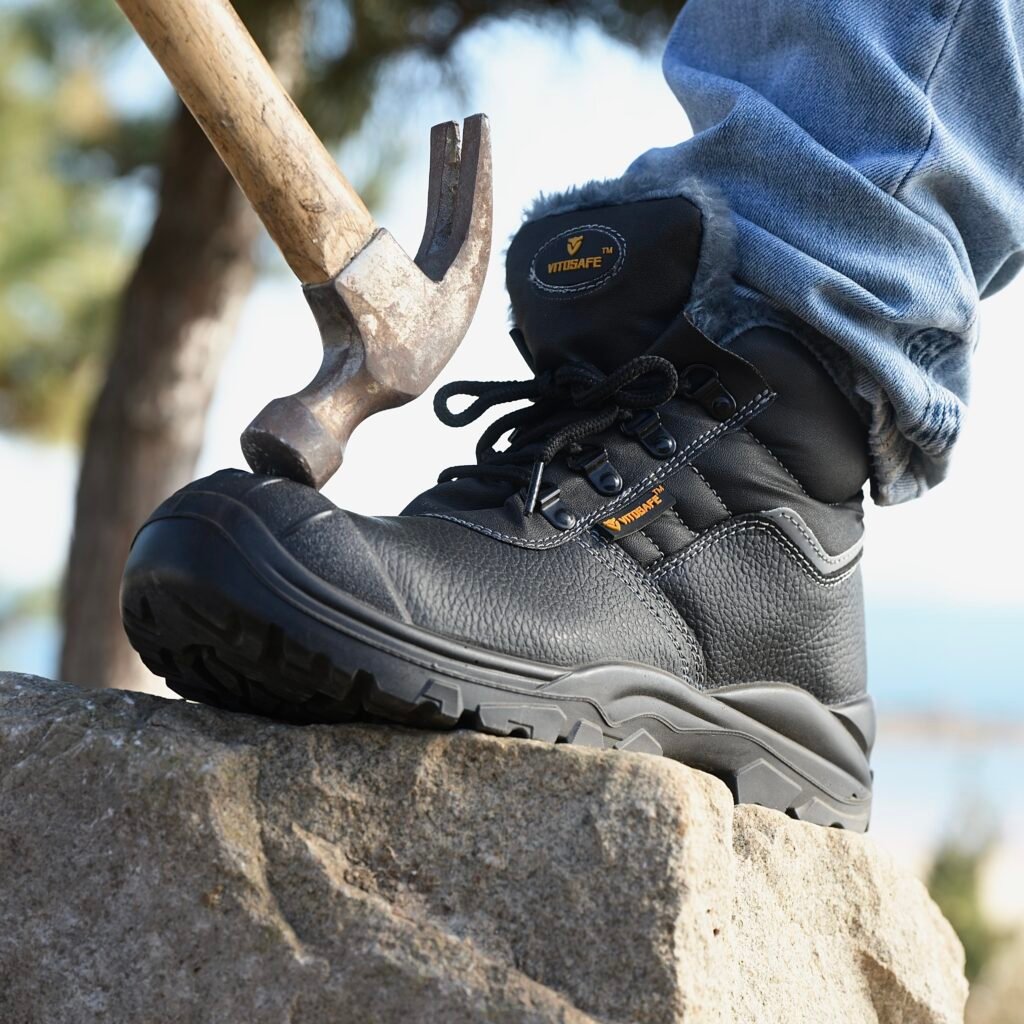
Why Safety Shoe Sizing Differs from Regular Shoes
Safety shoes are not built like regular shoes.
Here’s why sizing feels different:
- The toe cap takes up space. A steel toe cap sits inside the front of the shoe. It creates a protective zone — but that zone reduces the interior space for your toes. If you size the same as your regular shoes, your toes may press against the cap.
- Lasts vary by brand. The “last” is the mold used to build a shoe. Different brands use different lasts — narrow, standard, or wide. The same size number can fit very differently across brands.
- Insoles add volume. Many safety shoes include thick, supportive insoles. These take up more interior space than regular shoe insoles.
The result: you may need to go up half a size or a full size compared to your everyday shoes.
How to Measure Your Foot Correctly
Follow these steps to get your most accurate measurement.
Step 1: Measure in the Afternoon
Feet swell throughout the day. By late afternoon, your feet are at their largest size. Measuring in the morning means you may buy shoes that feel tight by 3pm.
Always measure in the afternoon or evening.
Step 2: Measure Both Length and Width
What you need:
- A piece of paper
- A pen or pencil
- A ruler or tape measure
How to measure length:
- Place the paper on a hard flat floor
- Stand on it with your full weight
- Trace around your foot
- Measure from the heel to the tip of your longest toe
- Repeat for both feet
How to measure width:
- Measure across the widest part of your foot tracing
- This is usually across the ball of your foot
Measure both feet. Most people have one foot slightly larger than the other. Always fit the larger foot.
Step 3: Match to a Size Chart
Use your measurements to find your size on a brand-specific size chart.
Do not rely on your regular shoe size alone. Size charts vary between regions too — US, UK, EU, and CM sizing are all different.
Width Matters Too
Most people only think about length. Width is equally important.
A shoe that is the right length but too narrow will:
- Compress the sides of your foot
- Cause blisters along the outer edges
- Create bunion pressure over time
- Reduce circulation during long shifts
If you have wide feet:
- Look for shoes labeled “wide fit” or “wide toe box”
- Avoid pointed or narrow toe box styles
- Choose black safety shoes steel toe designs with a rounded toe box — they offer more width across the forefoot
- Go up half a size if a wide-fit option is not available
If you have narrow feet:
- Look for women-specific lasts, which tend to be narrower at the heel
- Use lacing techniques that lock the heel in place
- Avoid shoes that are too wide — your foot will slide inside and cause friction
Men’s vs. Women’s Sizing
Men’s and women’s safety shoes are not the same — and they shouldn’t be.
Men’s safety shoes:
- Built on a wider, straighter last
- Higher volume interior to accommodate larger foot volume
- The best safety steel toe shoes for men are available in standard and wide widths
Women’s safety shoes:
- Built on a narrower heel with a wider forefoot ratio
- Lower arch profile to match female foot anatomy
- The best women’s steel toe safety shoes are built on female-specific lasts — not smaller versions of men’s shoes
Women who wear men’s safety shoes experience heel slippage, arch pain, and poor fit across the forefoot.
If you’re a woman shopping for safety shoes, always choose a style built on a women’s last. Vitoppe’s women’s range — including black safety shoes non slip and steel toe styles — is designed specifically for female foot anatomy.
Common Sizing Mistakes to Avoid
These are the mistakes workers make most often:
Mistake 1: Buying the same size as your regular shoes Safety shoes fit differently. Always measure first.
Mistake 2: Buying too tight Tight shoes cause immediate blisters and long-term joint damage. Your toes should never touch the steel toe cap during normal walking.
Mistake 3: Buying too loose A shoe that is too big causes your foot to slide. This creates heel blisters and reduces control — especially on ladders or uneven surfaces.
Mistake 4: Ignoring width Length without width is incomplete sizing. Always check width — especially if you have wide feet.
Mistake 5: Not wearing your work socks Work socks are thicker than everyday socks. Always size your safety shoes while wearing the socks you’ll actually use on the job.
How to Test the Fit Before Your First Shift
Before you wear your new safety shoes to work, run through this checklist:
✅ Heel check — Does the heel stay firmly in place when you walk? No slipping allowed.
✅ Toe check — Can you wiggle all your toes freely? Is there at least one thumb’s width of space between your longest toe and the steel toe cap?
✅ Width check — Does the shoe feel comfortable across the widest part of your foot? No pinching or compression on the sides.
✅ Arch check — Does the insole support your arch without pressing awkwardly into it?
✅ Walk test — Walk up and down stairs if possible. Your foot should feel stable and secure at every step.
✅ Sock test — All of the above should be tested while wearing your actual work socks.
If anything feels wrong during this test — the fit is wrong. A comfortable safety toe shoe should feel supportive and secure from the first moment you put it on.
Vitoppe Sizing Support
Finding the right size should not be a guessing game.
Vitoppe offers:
- Detailed size charts for all men’s and women’s styles — including black steel toe safety shoes, black safety shoes non slip and steel toe, and athletic safety shoe collections
- Width options across key product lines for both standard and wide-fit needs
- Customer support to help you choose between sizes or styles before you order
Whether you’re looking for the best women’s steel toe safety shoes for a long shift, or black safety shoes steel toe for a professional environment — our team will help you get the fit right the first time.
All Vitoppe safety shoes are CTC and SGS certified. Every pair is tested before it leaves our facility.
Conclusion
The right safety shoe fit is not a luxury — it’s part of your protection.
Here’s your quick sizing checklist:
- Measure your feet in the afternoon
- Measure both length and width
- Always wear your work socks when sizing
- Allow thumb’s width of space between toe and steel cap
- Choose a women-specific last if you’re a woman
- Run the fit test checklist before your first shift
The best safety steel toe shoes are not just the most protective — they’re the ones that fit correctly and keep you comfortable across a full shift.
Need Help Finding Your Size?
Not sure which size or style is right for you?
Contact the Vitoppe team. We’ll look at your measurements, your job environment, and your preferences — and recommend the right fit.