
Every year, thousands of workers are injured because they wore the wrong shoes.
Many of them thought their regular sneakers were good enough. They weren’t.
Whether you’re looking at mens steel toe safety shoes for a construction site or steel toe safety shoes for ladies in a food processing plant — the difference between safety shoes and regular shoes is not just about comfort. It could be the difference between walking out of work or being carried out.
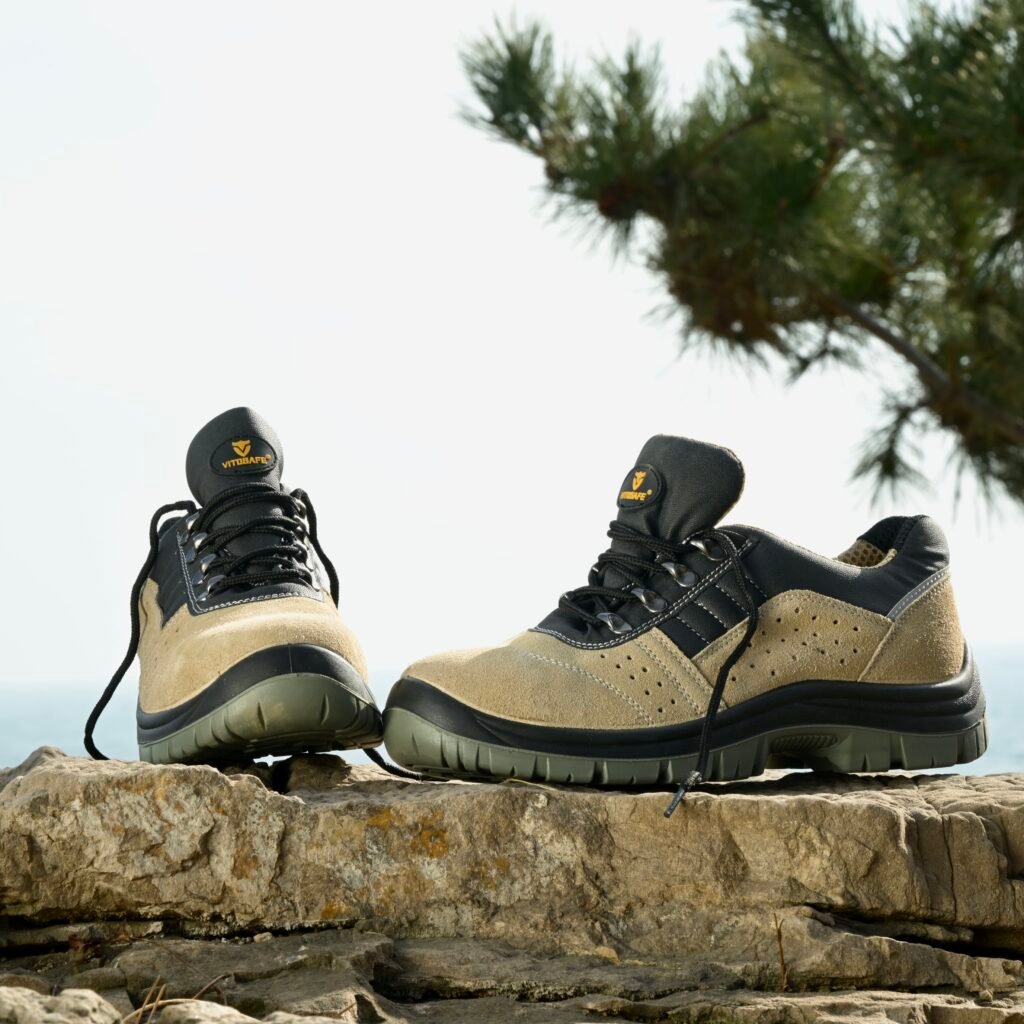
What Regular Shoes Are Designed For
Regular shoes are designed for one thing: everyday life.
They prioritize:
- Comfort for walking on flat, clean surfaces
- Style and appearance
- Lightweight construction for casual wear
That’s it.
Regular shoes have no reinforced toe. No puncture-resistant sole. No slip-resistant tread designed for oil or wet floors.
Put them in an industrial environment and they offer almost zero protection.
What Safety Shoes Are Designed For
Safety shoes are engineered for hazardous environments.
Every feature has a purpose:
- Steel or composite toe cap — Protects against falling objects and compression. A single dropped tool can exert hundreds of kilograms of force.
- Puncture-resistant midsole — Stops sharp objects like nails from going through the sole and into your foot.
- Slip-resistant outsole — Designed specifically for oily, wet, or uneven surfaces where standard rubber soles fail.
- Anti-static properties — Prevents dangerous static discharge in electrical or explosive environments.
- Chemical-resistant materials — Protects against acids, solvents, and industrial fluids.
Each of these features corresponds to a real injury that happens to real workers every day.
The 5 Key Structural Differences
| Feature | Regular Shoes | Safety Shoes |
|---|---|---|
| Toe Protection | None | Steel or composite toe cap |
| Sole Construction | Standard rubber | Puncture-resistant + slip-resistant |
| Materials | Lightweight fabric or leather | Industrial-grade leather, PVC, or synthetic |
| Certification | None | CTC and SGS certified |
| Lifespan (work use) | Weeks to months | 12–24 months with proper care |
The structural gap is not small. It is enormous.
A regular shoe will begin to fail the moment it enters a real work environment. A safety shoe is built to last through it.
The Real Cost of Getting It Wrong
Some workers avoid safety shoes because of the price.
Let’s compare the actual numbers:
- A quality pair of safety shoes: $50 – $150
- Emergency room visit for a foot injury: $1,000 – $3,000+
- Surgery for a crushed toe: $10,000 – $30,000+
- Lost wages during recovery: Weeks to months of income
The math is not complicated.
One prevented injury pays for years of safety footwear.
And that’s before considering the pain, the recovery time, and the long-term damage a serious foot injury can cause.
When Is It Legally Required to Wear Safety Shoes?
In many countries and industries, safety footwear is not optional — it’s the law.
In the United States, OSHA (Occupational Safety and Health Administration) requires employers to assess workplace hazards and provide appropriate personal protective equipment — including safety footwear — when hazards are present.
Employers who fail to enforce safety shoe requirements can face significant fines.
Workers who refuse to wear required safety footwear may face disciplinary action — and lose the right to workers’ compensation if injured.
Industries where safety shoes are typically required:
- Construction and civil engineering
- Manufacturing and heavy industry
- Warehousing and logistics
- Mining and oil & gas
- Food processing and agriculture
- Electrical and utility work
If you work in any of these environments — safety shoes are not a choice. They are a requirement.
Vitoppe’s Range — Safety for Every Job
Vitoppe designs certified safety footwear for workers across every industry.
For men: Our steel toe safety shoes mens collection covers everything from heavy-duty construction boots to lightweight athletic styles. Each pair of men safety shoes steel toe is built with a men-specific last and industrial-grade materials for all-day protection.
👉 [Shop Men’s Steel Toe Safety Shoes →]
For women: Women deserve safety shoes designed for their feet — not shrunken versions of men’s styles. Our steel toe safety shoes women’s and women steel toe safety shoes collection is built on female-specific lasts for a secure, comfortable fit. We also offer work safety women steel toe shoes in lightweight athletic designs for workers who need to stay on their feet all day.
👉 [Shop Women’s Steel Toe Safety Shoes →]
Specialty options:
- Safety steel toe shoe covers — A practical solution for visitors or workers who need temporary toe protection without changing shoes
- Steel toe safety shoes for ladies in dress styles — Professional appearance with full protective capability
All Vitoppe safety shoes are CTC and SGS certified. Every pair is tested before it leaves our facility.
👉 [View Full Safety Shoe Collection →]
Conclusion
Regular shoes belong in your daily life — not on a worksite.
The gap between a regular shoe and a certified safety shoe is the gap between being protected and being vulnerable.
Here’s what to remember:
- Regular shoes have no protective features for industrial environments
- Safety shoes are engineered for specific hazards your job creates
- The cost of a good safety shoe is nothing compared to the cost of a foot injury
- In many industries, wearing safety shoes is legally required
If you’re a man looking for mens steel toe safety shoes, or a woman searching for steel toe safety shoes for ladies — Vitoppe has a certified option built for your job.
Ready to Make the Switch?
Don’t wait for an accident to remind you why safety shoes matter.
Browse Vitoppe’s full range of certified safety footwear for men and women — and find the right pair for your job today.