
Not every job needs the heaviest safety shoe on the market.
Choosing the wrong type costs you — in fatigue, in comfort, and in long-term health.
If you’re deciding between casual steel toe safety shoes for a warehouse role or heavier boots for a construction site, this guide gives you a clear answer. We also break down composite vs steel toe safety shoes so you can match your footwear to your actual workplace hazards — not just what looks tough.
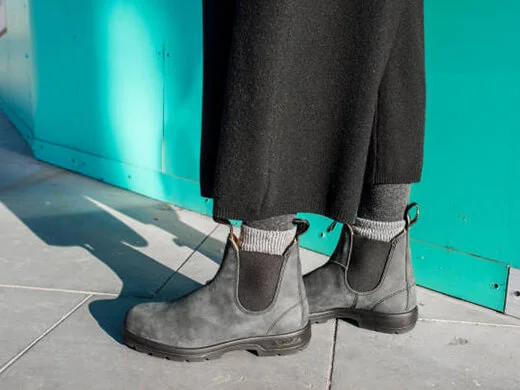
What Makes a Safety Shoe “Heavy-Duty”?
Heavy-duty safety shoes are built for extreme environments.
Every component is designed for maximum protection:
- Steel toe cap — Handles the highest impact and compression loads
- Steel puncture-resistant midsole — Stops nails, glass, and sharp debris from penetrating the sole
- Thick, oil-resistant outsole — Provides grip on rough, uneven, and oily surfaces
- Full-grain leather upper — Resists abrasion, water, and heat
These shoes are heavy. They are built to be.
Best for:
- Construction and civil engineering
- Mining and oil & gas
- Heavy manufacturing and metal fabrication
- Demolition and earthworks
In these environments, the extra weight is worth every gram. The protection they offer cannot be compromised.
What Makes a Safety Shoe “Lightweight”?
Lightweight safety shoes are built for mobility and all-day comfort.
They use advanced materials to reduce weight without sacrificing protection:
- Composite toe cap — Carbon fiber or Kevlar instead of steel. Same protection rating. Significantly lighter.
- EVA or foam midsole — Cushions each step and reduces leg fatigue
- Breathable mesh or synthetic upper — Keeps feet cool during long shifts
- Flexible, slip-resistant outsole — Provides grip without bulk
These shoes feel closer to athletic footwear than traditional work boots.
Best for:
- Warehousing and logistics
- Food processing and hospitality
- Retail and healthcare
- Office environments with safety compliance requirements
- Female workers who need all-day comfort
When the hazards are moderate — and movement is constant — lightweight is the smarter choice.
The Weight Factor: Why It Matters for All-Day Wear
Weight is not just a comfort issue. It is a safety issue.
Research shows that every 100g added to footwear increases energy expenditure during walking by approximately 1%.
Across an 8 to 10-hour shift, that adds up fast:
- Heavier legs
- Poor posture from compensating
- Slower reaction times
- Higher risk of trips and falls at the end of a shift
For women workers, weight matters even more.
Women generally have smaller muscle mass in the lower leg. A heavy shoe that a male worker tolerates may cause real fatigue and pain for a female worker by midday.
Light safety shoes for womens are not a style preference — they are a functional requirement. Lightweight designs help women stay safe, comfortable, and focused across full shifts.
This is also why understanding composite vs steel toe safety shoes matters for female workers specifically. Composite toe caps offer the same certified protection at a fraction of the weight.
Performance Comparison Table
| Feature | Heavy-Duty Safety Shoes | Lightweight Safety Shoes |
|---|---|---|
| Weight | 600g – 1,200g per shoe | 300g – 600g per shoe |
| Toe Protection | Steel toe cap | Composite toe cap |
| Impact Resistance | Maximum (highest rating) | High (meets certified standards) |
| Puncture Resistance | Steel midsole | Composite or no midsole |
| Comfort (long shifts) | Moderate | High |
| Breathability | Low to moderate | High |
| Price | Moderate to high | Moderate |
| Best Environment | Extreme hazard sites | Light to moderate hazard environments |
Both types can be CTC and SGS certified. Certification is about protection standards — not weight.
Industry-Specific Recommendations
| Industry | Recommended Type | Notes |
|---|---|---|
| Construction | Heavy-Duty | Steel toe + steel midsole essential |
| Mining | Heavy-Duty | Maximum impact and puncture protection |
| Warehousing | Lightweight | All-day mobility, moderate hazard |
| Food Processing | Lightweight | Slip-resistance + hygiene compliance |
| Healthcare | Lightweight | Comfort and non-slip priority |
| Retail | Lightweight / Casual | Casual steel toe safety shoes for compliance without bulk |
| Office (safety compliance) | Lightweight / Executive | Executive steel toe safety shoes for professional environments |
| Manufacturing (light) | Lightweight | Composite toe sufficient for most tasks |
| Oil & Gas | Heavy-Duty | Extreme environment demands maximum protection |
| Electrical & Utility | Lightweight | Composite toe required — non-conductive |
Casual and Executive Styles: Safety Without the Look
Not all safety shoes look like work boots.
Casual steel toe safety shoes are designed for workers who need protection but spend time in customer-facing or mixed environments. They look like regular casual sneakers — but carry full toe cap protection inside.
Executive steel toe safety shoes go further. They are styled to look like formal dress shoes or business footwear. No one in a boardroom or client meeting would know they are safety shoes. But they meet full certified protection standards.
Both styles are increasingly popular in:
- Real estate and site management
- Sales roles that visit industrial sites
- Supervisory and management positions
- Any role that requires both office and site access
If your job moves between office and worksite in the same day, these styles solve the problem without compromising protection.
Vitoppe’s Lightweight & Heavy-Duty Lines
Vitoppe designs safety footwear across the full spectrum — from ultra-lightweight athletic styles to maximum-protection heavy-duty boots.
Lightweight Collection
- Composite toe cap options for reduced weight
- Breathable mesh and synthetic uppers
- Athletic and casual designs including casual steel toe safety shoes
- Light safety shoes for womens built on female-specific lasts
- Ideal for warehousing, food processing, healthcare, and retail
👉 [Shop Lightweight Safety Shoes →]
Heavy-Duty Collection
- Full steel toe cap and steel midsole construction
- Oil-resistant, slip-resistant thick outsoles
- Full-grain leather uppers for durability
- Built for construction, mining, and heavy manufacturing environments
👉 [Shop Heavy-Duty Safety Shoes →]
Executive & Casual Collection
- Executive steel toe safety shoes in professional dress styles
- Casual steel toe safety shoes in everyday sneaker designs
- Full protection inside — polished appearance outside
- Available in men’s and women’s sizing
👉 [Shop Executive & Casual Safety Shoes →]
All Vitoppe safety shoes are CTC and SGS certified. Every pair is tested before it leaves our facility.
Conclusion
Heavier is not always better.
The best safety shoe is the one that matches your actual workplace hazards — while keeping you comfortable and focused across your entire shift.
Here’s a quick decision guide:
Extreme hazards, falling objects, sharp debris? → Choose heavy-duty. Long shifts, moderate hazards, constant movement? → Choose lightweight. Office + site access in the same day? → Choose executive or casual steel toe.
When comparing composite vs steel toe safety shoes, remember: composite is not weaker — it’s lighter. For many environments, it is the smarter choice.
Ready to Find the Right Safety Shoe for Your Job?
Browse Vitoppe’s full range — lightweight, heavy-duty, casual, and executive styles — all CTC and SGS certified.
Not sure which type suits your role? Contact our team. We’ll match you to the right shoe for your environment and your budget.