
“Waterproof” and “water-resistant” sound almost the same.
But for workers in wet environments, the difference is huge.
Pick the wrong one and you’ll end up with soaked feet halfway through your shift. That’s uncomfortable. It’s also a health and safety risk.
This guide explains the difference clearly — and helps you choose the right protection for your job.
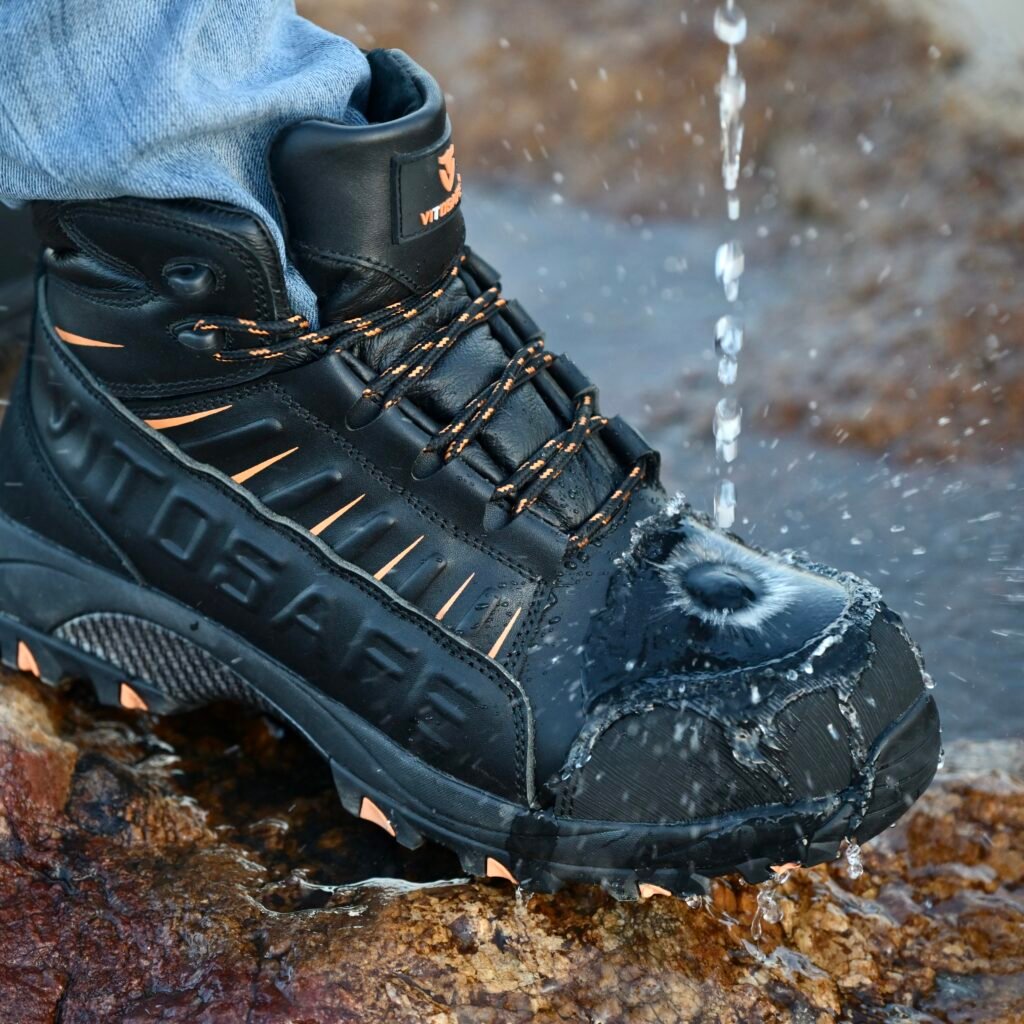
What Does Water-Resistant Mean?
Water-resistant shoes can handle light moisture.
Think: light rain, splashes, brief contact with wet surfaces.
The outer material — leather, synthetic fabric, or treated mesh — repels small amounts of water. But it’s not sealed. Water will eventually get in.
Water-resistant works well for:
- Indoor environments with occasional wet floors
- Light outdoor use in dry climates
- Workers who are not standing in puddles or mud
Water-resistant is a surface treatment. It’s not a structural feature. Over time, that treatment wears off — especially with heavy use.
What Does Waterproof Mean?
Waterproof shoes are fully sealed against water entry.
They use special membranes, sealed seams, or full waterproof material construction. Water cannot penetrate — even when standing in puddles or walking through mud.
Waterproof works well for:
- Outdoor worksites exposed to rain
- Wet floors in food processing plants
- Agriculture, fishing, and cleaning environments
- Cold and wet weather conditions
Waterproof is a construction standard. It doesn’t wear off the same way surface treatments do.
If your job involves sustained contact with water, only waterproof will do.
Why It Matters on the Job
Wet feet are not just uncomfortable. They are dangerous.
Health risks of wet feet at work:
- Fungal infections — Moisture creates the perfect environment for athlete’s foot and other fungal conditions
- Trench foot — Prolonged wet exposure damages skin and nerves
- Frostbite risk — In cold environments, wet feet lose heat rapidly
- Blisters — Wet skin rubs more easily against shoe materials
Performance risks:
- Wet feet cause distraction and discomfort
- Discomfort leads to fatigue
- Fatigue leads to mistakes
- Mistakes cause accidents
A properly waterproof safety shoe keeps your focus on the job — not your feet.
Common Waterproofing Technologies
Not all waterproofing is the same. Here’s what to look for:
PVC Construction (Full Waterproof)
PVC boots are molded from a single piece of material. There are no seams. No stitching. No gaps for water to enter. This is the most reliable waterproofing available.
Best for: agriculture, fishing, outdoor construction, cleaning, food processing.
Waterproof Membrane Technology
A thin membrane layer is bonded inside the shoe upper. It blocks water from outside while allowing moisture vapor from your foot to escape. This keeps feet dry from both directions.
Best for: construction boots, men’s steel toe safety shoes, women’s steel toe safety shoes in outdoor environments.
Wax or Spray Treatments (Water-Resistant Only)
These are applied to the outside of the shoe. They repel light moisture — but they are not waterproof. They wear off with use and need reapplication.
Best for: light indoor or dry outdoor environments where full waterproofing is not required.
Important: A shoe marketed as “treated for water resistance” is not the same as a certified waterproof shoe. Always read the product description carefully.
When to Choose Each Type
| Work Environment | Recommended Type | Notes |
|---|---|---|
| Outdoor construction in rain | Waterproof | Choose safety shoes for men steel toe work with sealed construction |
| Food processing (wet floors) | Waterproof | PVC or membrane options |
| Warehouse / indoor logistics | Water-Resistant | Light moisture exposure only |
| Agriculture / farming | Waterproof | PVC boots recommended |
| Office with occasional outdoor exposure | Water-Resistant | Dress steel toe safety shoes with treated leather |
| Mining / oil & gas (wet conditions) | Waterproof | Full membrane + safety shoes with steel toe cap |
| Cold outdoor environments | Waterproof | Prevents heat loss through moisture |
| Light manufacturing (dry environment) | Water-Resistant | Sufficient for controlled indoor conditions |
Choosing the Right Toe Protection Too
Waterproofing and toe protection are separate features — but both matter.
Here’s how to combine them:
For men in heavy outdoor roles: Choose steel toe safety shoes men with full waterproof construction. Safety shoes for men with steel toe and membrane waterproofing give you impact protection and dry feet in one shoe.
For men in lighter roles: Safety shoes for men steel toe work with water-resistant treatment may be sufficient. Works well for indoor logistics, light manufacturing, and warehouse environments.
For women in outdoor or heavy-duty roles: Women’s safety shoes steel toe in waterproof construction are now widely available. Women’s steel toe safety shoes with sealed seams and female-specific lasts offer the best of both worlds.
For office or client-facing roles: Dress steel toe safety shoes with water-resistant leather keep you looking professional — even in light rain. These are ideal when full waterproofing is unnecessary, but protection is still required.
All Vitoppe waterproof and water-resistant safety shoes — including all safety shoes with steel toe cap options — are CTC and SGS certified.
Vitoppe Waterproof Safety Shoe Products
Vitoppe offers waterproof solutions across multiple product lines.
PVC Rain Boot Collection
- Full PVC molded construction — zero water entry points
- Available in ankle-height and knee-height options
- Slip-resistant outsole for wet and muddy surfaces
- Lightweight and easy to clean
- Best for: agriculture, cleaning, food processing, outdoor worksites
👉 [Shop PVC Rain Boots →]
Waterproof Safety Shoes with Steel Toe
- Membrane waterproofing with sealed seams
- Available in men’s steel toe safety shoes and women’s safety shoes steel toe styles
- Steel toe cap protection meets CTC and SGS certification standards
- Breathable interior lining to manage moisture from inside
- Available in low-cut and mid-cut styles
👉 [Shop Waterproof Steel Toe Safety Shoes →]
Water-Resistant Dress Safety Shoes
- Treated leather or synthetic upper
- Professional appearance for office and clinical settings
- Dress steel toe safety shoes with steel toe cap protection
- Ideal for light moisture environments
👉 [Shop Dress Safety Shoes →]
How to Tell If a Shoe Is Truly Waterproof
Before you buy, ask these questions:
- Is it certified waterproof — or just treated?
- Are the seams sealed — or just stitched?
- Does it use a waterproof membrane — or only surface coating?
- Is the outsole also sealed — or just the upper?
If a brand cannot answer these questions clearly, look elsewhere.
At Vitoppe, every waterproof product specification is clearly stated. No vague claims. No misleading language.
Conclusion
Waterproof and water-resistant are not interchangeable.
Here’s the simple rule:
Sustained water contact = Waterproof. Occasional splashes = Water-resistant.
Choose waterproof if you work outdoors, in wet facilities, or in standing water. Choose water-resistant if you work indoors with minimal moisture exposure.
And always make sure your safety shoes — whether waterproof or not — carry proper certification.
All Vitoppe shoes, including our full range of steel toe safety shoes men, women’s steel toe safety shoes, and dress steel toe safety shoes, are CTC and SGS certified. Every pair is tested before it leaves our facility.
Not Sure Which One You Need?
Tell us where you work. We’ll recommend the right waterproof or water-resistant safety shoe for your environment, your toe protection needs, and your budget.