
Both steel toe and composite toe safety shoes protect your feet. But choosing the wrong one can make your workday miserable.
The right toe cap depends on your job — not just your preference.
This guide breaks it all down. By the end, you’ll know exactly which one to pick.
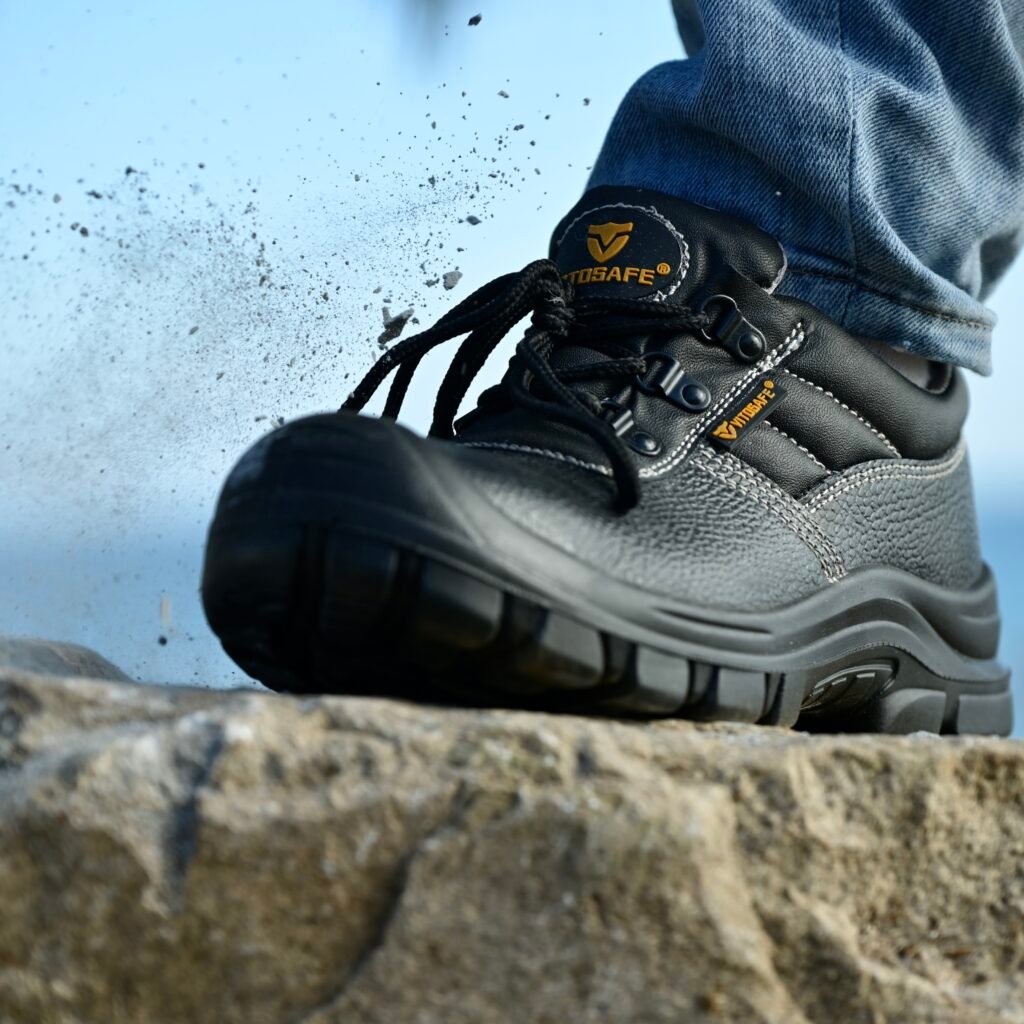
What Is a Steel Toe Cap?
A steel toe cap is made from high-strength steel. It sits inside the front of the shoe. It protects your toes from heavy impacts and compression.
Why workers choose steel toe:
- Strongest protection available. Steel toe cap safety shoes meet the highest impact resistance ratings.
- Lower cost. Steel is cheaper to manufacture. This keeps prices affordable.
- Proven and trusted. Steel toe has been the industry standard for decades.
The downsides:
- Heavier. Steel adds weight to every step. This adds up over a long shift.
- Conducts electricity. Not safe in electrical environments.
- Triggers metal detectors. This can slow you down in airports or secure facilities.
Mens safety shoes steel toe are widely available in boots, low-cuts, and even athletic styles. They suit most heavy-duty industries.
What Is a Composite Toe Cap?
A composite toe cap is made from non-metal materials. Common materials include carbon fiber, Kevlar, fiberglass, or reinforced plastic.
Why workers choose composite toe:
- Much lighter. Less weight means less fatigue at the end of the day.
- Non-conductive. Safe to wear around live electrical equipment.
- No metal detector issues. Ideal for airports, courthouses, and secure sites.
- Warmer in cold environments. Composite materials don’t conduct cold like steel does.
The downsides:
- Slightly bulkier. The toe box is a little thicker to achieve the same protection level.
- Higher price point. Advanced materials cost more to produce.
Composite toe is popular among workers who stay on their feet all day and need lightweight comfort without sacrificing protection.
Steel Toe vs. Composite Toe: Head-to-Head Comparison
| Feature | Steel Toe | Composite Toe |
|---|---|---|
| Weight | Heavier | Lighter |
| Electrical Safety | ❌ Conducts electricity | ✅ Non-conductive |
| Metal Detector | ❌ Triggers alarms | ✅ No alarm |
| Impact Protection | ⭐⭐⭐⭐⭐ Highest | ⭐⭐⭐⭐ High |
| Price | Lower | Higher |
| Comfort (long shifts) | Moderate | Better |
| Cold Weather | Gets cold | Stays warmer |
| Best For | Construction, Mining, Warehousing | Electrical, Airports, Food Processing |
Both types meet ASTM and EN ISO safety standards. The difference is in how and where you wear them.
Who Should Choose Steel Toe Safety Shoes?
Choose steel toe cap safety shoes if you work in:
- Construction sites — Heavy materials fall. Steel toe gives you the strongest defense.
- Heavy manufacturing — Machinery, presses, and equipment create serious crush risks.
- Warehousing and logistics — Forklifts, pallets, and heavy loads are daily hazards.
- Mining — Extreme conditions require maximum protection.
- Oil and gas — High-impact environments where nothing less than steel will do.
If your job involves falling objects, heavy machinery, or extreme compression risks — steel toe is your answer.
Mens safety shoes steel toe are the go-to choice for these industries. They’re built tough. They last long. And they keep your feet safe when it matters most.
Who Should Choose Composite Toe Safety Shoes?
Choose composite toe if you work in:
- Electrical and utility work — Composite toe is non-conductive. It won’t put you at risk near live wires.
- Airports and secure facilities — Walk through metal detectors without stopping.
- Food processing plants — Lightweight, easy to wear through long hygiene-controlled shifts.
- Healthcare and lab environments — Clean, lightweight, and compliant with facility rules.
- Roles requiring long periods of walking — Less fatigue means better performance.
Steel toe ladies safety shoes and safety shoe steel toe women options exist in both categories. But many female workers in light industrial roles prefer composite toe for the reduced weight and better fit in narrower lasts.
If you’re shopping for athletic safety shoes steel toe or athletic steel toe safety shoes, you’ll also find composite toe versions that offer a sports shoe feel with full protection. These are perfect for workers who want mobility without losing safety compliance.
Vitoppe’s Steel Toe & Composite Toe Collections
At Vitoppe, we design safety footwear for real workers in real environments.
Our Steel Toe Collection includes:
- Classic work boots with full steel toe cap protection
- Low-cut safety shoes for warehouse and logistics teams
- Athletic steel toe safety shoes for workers who need sport-style comfort with heavy-duty protection
- Options in both mens and womens sizing, including steel toe ladies safety shoes
Our Composite Toe Collection includes:
- Lightweight athletic safety shoes steel toe-free design for electrical workers
- Slip-on composite toe shoes for food processing environments
- Fashion-forward styles for office-based safety compliance
- Wide range of safety shoe steel toe women styles with composite alternatives
👉 [Browse Steel Toe Safety Shoes →] 👉 [Browse Composite Toe Safety Shoes →]
All Vitoppe safety shoes meet CTC and SGS standards. Every pair is tested before it leaves our facility.
Final Verdict: Which One Should You Buy?
Here’s a simple rule:
Heavy impact risk? Choose steel toe. Electrical risk or long walking shifts? Choose composite toe.
If you work in construction, mining, or heavy manufacturing — steel toe cap safety shoes are your best bet.
If you work in electrical, food processing, or need to move quickly and lightly — composite toe wins.
And if you’re looking for athletic safety shoes steel toe options with a modern fit — both types now come in athletic styles that don’t sacrifice protection for comfort.
Still Not Sure?
That’s okay. Every job is different.
Contact our team and tell us where you work. We’ll help you find the right pair — steel toe or composite toe — that fits your job, your budget, and your feet.